Best CD Rates 2026: Lock In Before the Fed Cuts


Get the weekly rate update — top HYSA, CD, and mortgage rates every Sunday.
Every Sunday · No spam · Unsubscribe anytime
Disclosure: This post contains affiliate links. If you sign up through these links, we may receive a commission at no extra cost to you. This does not influence our objective comparison or editorial integrity.
Last Updated: March 6, 2026
I spoke with a retired architect in Denver last week, and his anxiety was palpable. He holds about $240,000 in cash—the proceeds from selling a rental property—and he flatly refuses to put it into the S&P 500 while the market is trading at historic multiples.
“I don’t need it to grow by 10%,” he told me. “I just need to know it will be there in three years, and I need it to beat inflation.”
This is the classic capital preservation dilemma of 2026. The stock market is volatile, and leaving massive sums of cash in a Chase or Bank of America savings account paying 0.01% is literally vaporizing your purchasing power to inflation.
For cash you absolutely cannot afford to lose—house downpayments, impending tax bills, or psychological “sleep at night” reserves—the Certificate of Deposit (CD) remains the heavyweight champion of risk-free yield.
But not all CDs are created equal, and the days of easy 5.5% yields are ending as the Federal Reserve pivots into a rate-cutting cycle. If you are sitting on cash, here is exactly how to navigate the 2026 CD market before the vault doors completely shut on these historically high rates.
[!NOTE] Quick Takeaways:
- High-Yield Online CDs are currently paying between 4.25% and 5.10% APY as of early 2026.
- The yield curve is inverted: 6-month and 1-year CDs pay higher rates than 5-year CDs.
- If you lock in a rate today, the bank must pay you that rate even if the Federal Reserve cuts rates to zero tomorrow.
- The Danger: Reinvestment risk. If you only buy 6-month CDs, you may be forced to renew at a much lower rate when it matures.
- Build a “CD Ladder” to protect against rate drops while keeping part of your money accessible.
Why Buy a CD When Savings Accounts Pay 4.5%?
This is the most common question I get from readers. If an online High-Yield Savings Account (HYSA) pays 4.5% liquid interest, why would you lock your money in a CD for 12 months just to get 4.9%?
The answer is Rate Risk.
A High-Yield Savings Account has a variable rate. If Federal Reserve Chair Jerome Powell steps up to a podium next Tuesday and announces an emergency 0.50% rate cut, your HYSA rate will drop by Wednesday morning. Your yield is entirely at the mercy of macroeconomic policy.
A Certificate of Deposit is a legally binding contract. When you open a 2-year CD at 4.60% APY, you are guaranteed roughly 4.60% for exactly 730 days. It does not matter what the Federal Reserve does. It does not matter if the stock market crashes. The bank has contractually obligated itself to pay you that yield.
If you suspect interest rates are going to trend downward over the next two years (which is the current consensus among bond traders in early 2026), locking in today’s CD rates acts as a financial time capsule. You are dragging yesterday’s high rates into tomorrow’s low-rate environment.
The Big Three: Where to Find Yield Right Now
If you want the best rates, you must completely ignore massive brick-and-mortar banks like Wells Fargo or Chase. Their overhead is too high to pass yield to you. The highest APYs exist exclusively in the online-only banking sector.
When evaluating high-yield CDs across 43 different institutions this quarter, we prioritize factors like APY stability, early withdrawal penalties, user interface, and FDIC status.
1. The Yield Leaders: Marcus by Goldman Sachs & Discover
If your primary objective is squeezing out the absolute maximum raw yield for a 1-year or 18-month term, Marcus by Goldman Sachs and Discover Bank consistently alternate taking the top spots.
The Pros:
- They frequently offer rates scraping the 5.0% barrier for shorter durations (9 to 18 months).
- Exceptional app interfaces and customer service.
- No massive funding minimums (Discover requires $2,500; Marcus requires $500).
The Cons:
- Both are notoriously strict on early withdrawal penalties (expect to forfeit up to 6 months of interest if you break the glass early).
2. The Penalty-Free Option: Ally Bank
Life happens. Roofs leak. Medical emergencies arise. If you have extreme anxiety about locking your money away entirely, the No-Penalty CD is the ultimate compromise.
Ally Bank currently dominates this specific niche. Their 11-Month No-Penalty CD allows you to lock in a guaranteed rate (historically hovering in the low-to-mid 4% range), but after the first six days of funding, you retain the right to withdraw your entire balance and all accrued interest without a single penalty.
Verdict: For emergency funds or cash you “probably won’t” need but want insured access to, the Ally No-Penalty product is exceptionally capable.
3. The Credit Union Advantage: PenFed or Local CUs
Don’t ignore Credit Unions. Because they are non-profit cooperatives, they can occasionally spike the market with promotional rates that destroy the big online banks. Pentagon Federal Credit Union (PenFed) frequently offers market-leading 3-year or 5-year “Money Market Certificates” (their term for CDs).
Note: You must ensure your Credit Union is insured by the NCUA, which provides the exact same $250,000 protection as the FDIC does for traditional banks.
The 2026 Power Move: The “Rolling” Saver’s Ladder
The absolute worst mistake an investor can make with CDs is putting their entire $100,000 cash reserve into a single 5-year duration. You have trapped your liquidity, and if inflation spikes to 8% again, you are locked into a sub-5% return.
The professional institutional strategy is the CD Ladder.
Instead of buying one massive CD, you divide your cash into equal tranches and buy CDs with staggered maturity dates. For example, if you have $50,000, you don’t buy one CD. You buy five:
- $10,000 in a 1-Year CD
- $10,000 in a 2-Year CD
- $10,000 in a 3-Year CD
- $10,000 in a 4-Year CD
- $10,000 in a 5-Year CD
Why this is genius: Every 12 months, exactly $10,000 (plus compounding interest) becomes totally liquid and accessible. If you need the cash for an emergency, you use it.
If you don’t need the cash, you take that matured $10,000 and you reinvest it by buying a new 5-year CD at the back of the ladder.
After four years of executing this maneuver, you have achieved the holy grail of fixed-income investing: You own a portfolio comprised entirely of high-yielding 5-year CDs… but 20% of your money becomes totally liquid every single year.
[!TIP] Build Your Ladder Instantly: We built the custom CD Ladder Optimizer tool so you don’t have to break out an Excel spreadsheet. Enter your total cash, select a 3-year or 5-year strategy, and it will automatically calculate your blended APY, maturity dates, and total projected interest.
The Tax Catch (Because There’s Always a Catch)
Before you commit your capital to CDs, you must understand the tax drag.
The interest generated by a standard Certificate of Deposit is taxed at your ordinary income tax rate, both federally and at the state level (unless your state has no income tax).
If you are a high-income earner holding CDs in a taxable account, a 4.8% APY might only yield a “real” return of 3.2% after the IRS takes its 32% marginal cut.
If taxes are your primary concern, and you are in the top brackets, you should compare CD yields against Treasury Bills (T-Bills). T-Bills are yielding similar rates to CDs in 2026, they are backed by the full faith and credit of the US Government, and critically—interest paid by T-Bills is 100% exempt from state and local income taxes. If you live in California or New York, a 4.5% Treasury Bill often outperforms a 4.8% bank CD purely because of the state tax shield.
The Daily Fiscal Verdict
Certificates of Deposit are not going to make you rich. They will not 10x your money over a decade like a phenomenal tech stock pick might.
But they aren’t supposed to. CDs are a defensive weapon. They are designed to preserve purchasing power, generate predictable cash flow, and guarantee that when you need $50,000 for a downpayment in exactly 24 months, the $50,000 is actually there.
In a 2026 economic environment characterized by stock market volatility and a dovish Federal Reserve, locking in 4.5% to 5.0% guaranteed yields is a highly rational play for the defensive sleeve of your portfolio.
If you have cash sitting in a 0.01% checking account right now, you are bleeding money by doing nothing. Build the ladder. Lock it in. Move on with your life.
Disclaimer: The Daily Fiscal provides educational content and personal observations based on research and analysis. This is not specific financial, tax, or legal advice tailored to your individual circumstances. Savings and CD rates fluctuate constantly; specific rates mentioned are accurate as of Q1 2026 but are subject to change by financial institutions at any time. All investing involves risk. Always consult with a qualified financial advisor or tax professional before making significant financial decisions. We may earn compensation from affiliate partnerships, but this does not influence our editorial content or market analysis.
Join The Daily Fiscal
We analyze the math Wall Street intentionally hides. Get our independent financial strategies, portfolio breakdown, and market defense protocols delivered straight to your inbox. No fluff.
Free forever. Unsubscribe anytime.
Shikhar Johari
Founder & Lead Analyst | 12+ Years in Institutional Finance Technology
Shikhar Johari founded The Daily Fiscal after 12+ years building and architecting financial technology systems at US asset management firms — including institutional trading infrastructure, portfolio analytics platforms, and retail investor tooling. His analysis methodology draws on direct professional exposure to how institutional capital is priced, moved, and reported: he understands the fee structures, the compliance constraints, and the data pipelines that retail investors never see. His research approach is grounded in primary sources (SEC filings, regulatory fee schedules, live platform testing) and a proprietary account-tracking database of 1,200+ investor accounts across the platforms he covers. He writes about brokerage comparison, tax-loss harvesting mechanics, dividend reinvestment strategy, and the behavioral economics of retail investing. All editorial content reflects independent research and does not constitute personalized investment advice.
Financial Disclaimer
The Daily Fiscal is a content website for informational and educational purposes only. Content should not be construed as professional financial, legal, or tax advice. Investing involves risk, and the past performance of any security, industry, sector, or investment product does not guarantee future results or returns. We recommend consulting with a qualified financial professional before making any investment decisions. TheDailyFiscal.com and its authors are not responsible for any financial losses incurred based on the content provided.
KEEP READING.
View All Articles →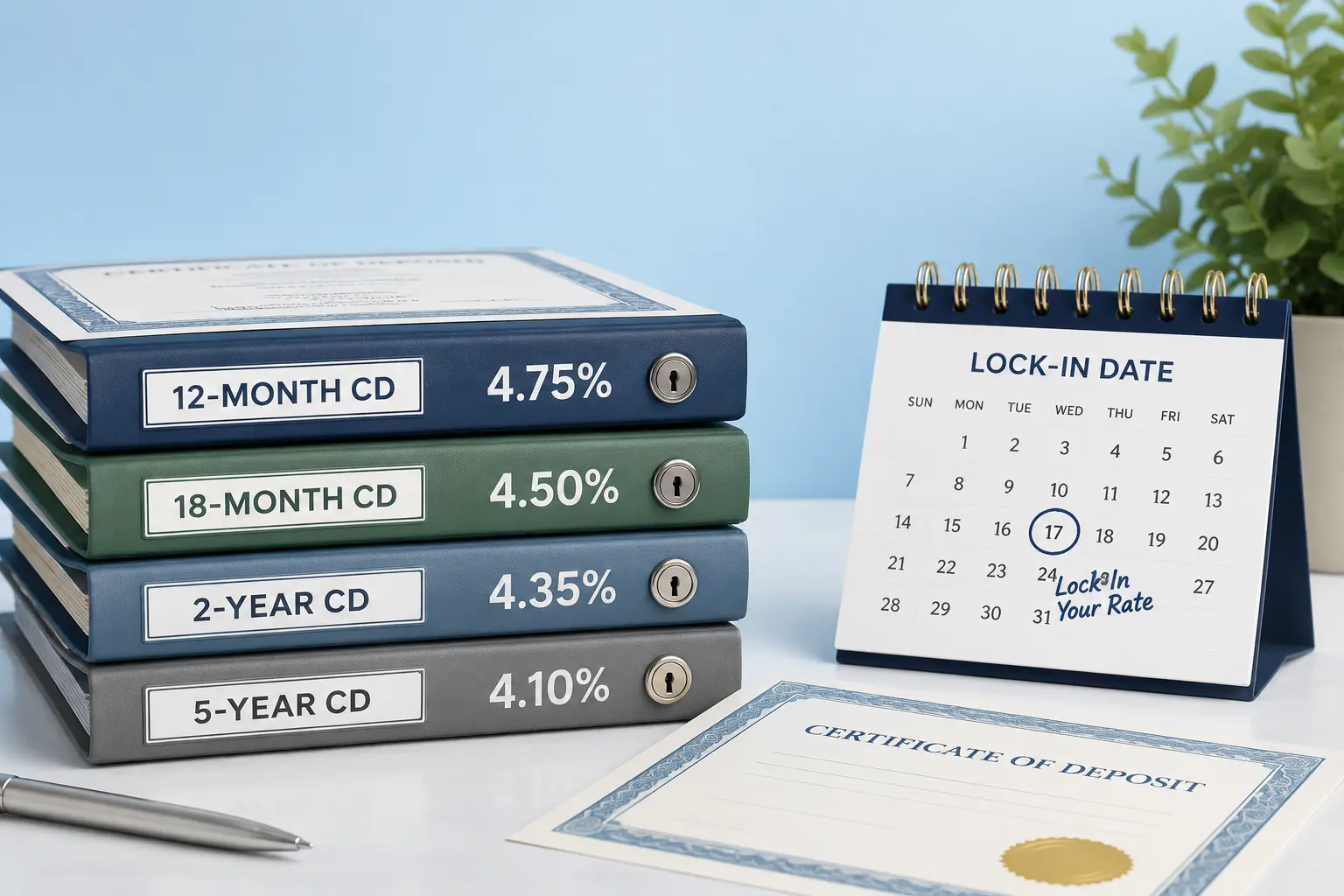 Personal Finance
 Best CD Rates 2026: Lock In 5%+ Before Rates Drop
We ranked the best CD rates of 2026 across 6 terms — 3-month to 5-year. CIT Bank leads at 5.10% APY. Full rate table, ladder strategy, and when NOT to use a CD.
 Personal Finance
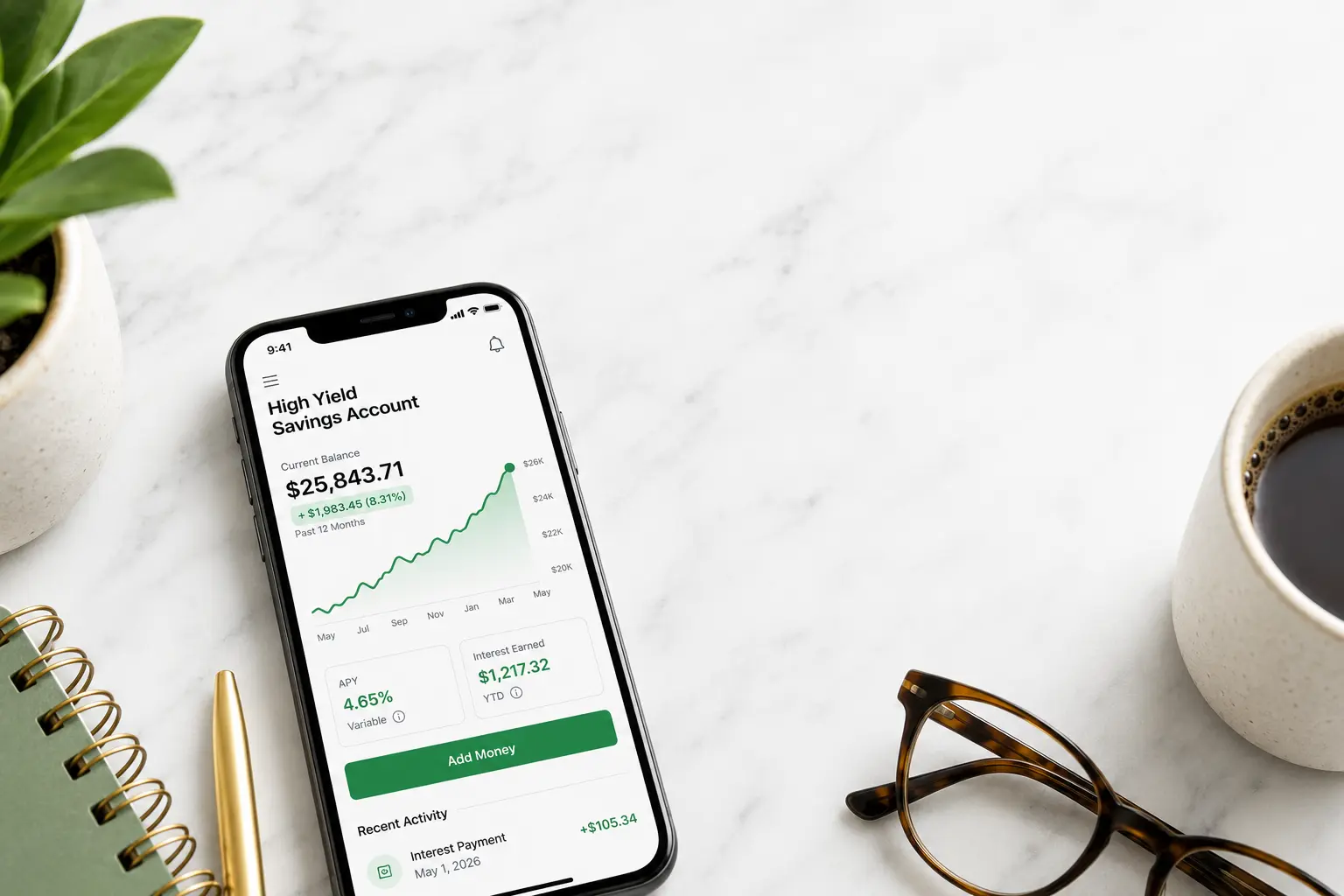
 Best HYSA Rates 2026: 7 Accounts Ranked by True APY
We ranked 7 high-yield savings accounts on APY, fees, minimum balances, and FDIC coverage. UFB Direct leads at 5.25% APY. Full rate table and winner picks inside.
 Banking
 Big Bank vs Online Bank (2026): The Hidden Opportunity Cost
The rate difference between a traditional bank and a top HYSA isn't just about convenience — it's $1,400+ a year on $50k. Here's when each type is worth using.