Costco Anywhere Visa Review 2026: Is the Reward Still #1?

Get the weekly rate update — top HYSA, CD, and mortgage rates every Sunday.
Every Sunday · No spam · Unsubscribe anytime
Disclosure: This post contains affiliate links. If you sign up through these links, we may receive a commission at no extra cost to you. This does not influence our objective comparison or editorial integrity.
Is the Costco Credit Card Still the Best Choice for Grocery Hedges in 2026?
For the last decade, the Costco Anywhere Visa® Card by Citi has been the “Executive’s Secret Weapon” for household management.
But as we navigate the economic landscape of 2026, the retail world has changed. Competitors like Sam’s Club and online bulk retailers are offering aggressive 5% cash-back alternatives, and the “once-a-year” reward payout of the Costco card is starting to feel increasingly outdated in an era of instant gratification.
Is the card still worth a slot in your wallet, or is it time to look elsewhere for your “grocery hedge”? After three months of tracking warehouse club rewards data, we have the answer.
[!NOTE] Quick Takeaways:
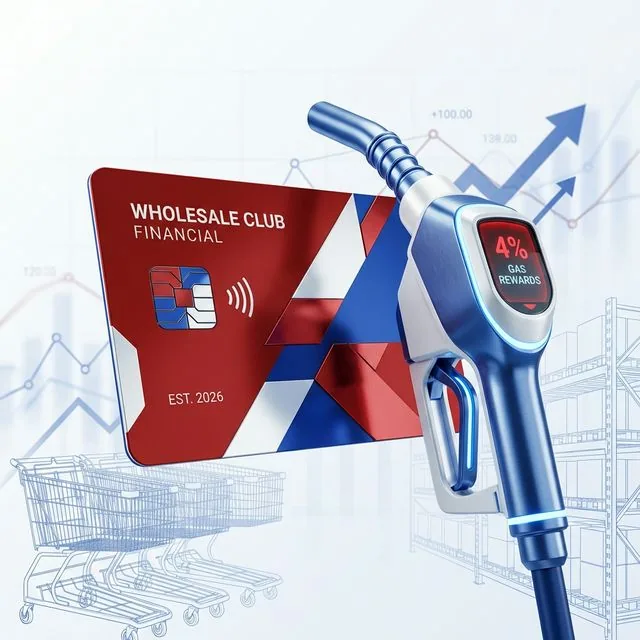
- The Gas King: The card still leads the market with 4% cash back on gas (up to $7k per year), which is vital as fuel prices remain volatile.
- The Costco Catch: While it’s a “Costco card,” it only earns 2% back at Costco. You can actually find 3% or even 5% elsewhere for warehouse shopping.
- The Payout Problem: You still have to wait until February of the following year to receive your rewards. In a high-inflation environment, “Time Value of Money” makes this a significant drawback.
- No Foreign Transaction Fees: Still a major perk for families traveling internationally.
- Action: If you spend more on gas than you do on bulk groceries, keep the card. If your bulk shopping is your main expense, you might be losing money by not using a “custom category” card.
Part 1: The Multiplier Audit — Where the Value Hidden
The Costco Visa is a “tier-based” card. Unlike a flat-rate card, its value depends entirely on how you use it.
- 4% on Gas & EV Charging: This is the heavy hitter. For a family with two SUVs driving 15,000 miles a year, this category alone can generate $250+ in rewards.
- 3% on Restaurants and Travel: This is remarkably high for a no-annual-fee co-branded card, making it a viable “single-card solution” for many families.
- 2% on Costco & Costco.com: Paradoxically, this is the weakest part of the card. Many generic “2% everywhere” cards (like the Wells Fargo Active Cash) offer the same rate at Costco without requiring a specific membership.
- 1% on everything else: Standard, but unremarkable.
Part 2: The “Hedge” Strategy — Beating Grocery Inflation
In 2026, “Grocery Hedging” isn’t a theory; it’s a survival tactic. Bulk shopping at Costco typically reduces your per-unit cost by 15-20% compared to standard supermarkets.
The Math of the Hedge: If you spend $1,000 a month at Costco:
- Direct Savings: ~$200 compared to Whole Foods/Safeway.
- Executive Membership (2%): $20/month.
- Costco Visa (2%): $20/month.
- Total Monthly Rebate: $40 + $200 in unit-cost savings.
That is a $2,880 annual win for your family. However, the Costco Visa is only providing 1/6th of that total value. If you used a card like the Citi Custom Cash or the Venmo Visa (which often counts wholesale clubs as “Groceries”), you could push that 2% up to 3% or 5%, potentially adding another $300 a year to your haul.
Part 3: The “Wait-a-Year” Reality Check
The biggest complaint we hear at The Daily Fiscal regarding this card is the reward payout structure.
While most cards in 2026 allow you to redeem cash back at the end of every billing cycle, Costco forces you to wait for a single annual certificate. This means Citi is effectively holding your money interest-free for up to 12 months.
In a world where High-Yield Savings Accounts are paying 4.5%+, that “delayed reward” has an opportunity cost. If you earned $1,000 in cash back, having it in your own account monthly versus waiting a year could be worth an additional $25 in interest. It’s a small number, but for a “Fiscal Realist,” every dollar counts.
Part 4: Competitive Alternatives
Should you jump ship? Compare these two common scenarios:
Scenario A: The Loyal Member
If you are already paying for a Costco Executive Membership and you fill up your tank at Costco Gas, there is almost no reason not to have this card. It streamlines your wallet and maximizes the 4% gas rate.
Scenario B: The Reward Maximizer
If you shop around—sometimes Sam’s, sometimes Costco, sometimes local supermarkets—you are better off with a Chase Freedom Flex or a Discover it® Cash Back card, which often feature 5% “Wholesale Club” or “Grocery” quarters.
The Daily Fiscal Verdict
The Costco Anywhere Visa® Card is no longer the “best in class” for groceries, but it remains the undisputed king of gas.
If you are a Costco die-hard who values a “one-and-done” credit card that covers travel, dining, and fuel with high percentages, keep it. But if you are chasing the absolute maximum return on your bulk shopping, it’s time to start looking at “Category-Agnostic” cards that treat warehouse clubs with the 3% or 5% respect they deserve.
Your “Wholesale” Action Plan
- Calculate Your Gas Spend: If it’s over $200/month, the Costco card’s 4% rate is likely your biggest potential win.
- Check Your Membership Level: Remember, the 2% for being an “Executive” member stacks with the card’s 2%. If you aren’t an Executive member, your return at Costco drops significantly.
- The “February Lookback”: Check your last rewards certificate. Was it worth the wait? If it was under $100, you are likely better off with a card that pays out monthly.
- Research thesam’s club Alternative: If Sam’s Club is closer, their Mastercard offers 5% on gas and 3% on club purchases for Plus members, which mathematically beats Costco in 2026.
Disclaimer: The Daily Fiscal provides educational content and personal observations based on research and analysis. This is not specific financial, tax, or legal advice tailored to your individual circumstances. All credit card offers are subject to credit approval. Membership requirements apply. We may earn compensation from affiliate partnerships, but this does not influence our objective comparison or editorial integrity.
Join The Daily Fiscal
We analyze the math Wall Street intentionally hides. Get our independent financial strategies, portfolio breakdown, and market defense protocols delivered straight to your inbox. No fluff.
Free forever. Unsubscribe anytime.
Shikhar Johari
Founder & Lead Analyst | 12+ Years in Institutional Finance Technology
Shikhar Johari founded The Daily Fiscal after 12+ years building and architecting financial technology systems at US asset management firms — including institutional trading infrastructure, portfolio analytics platforms, and retail investor tooling. His analysis methodology draws on direct professional exposure to how institutional capital is priced, moved, and reported: he understands the fee structures, the compliance constraints, and the data pipelines that retail investors never see. His research approach is grounded in primary sources (SEC filings, regulatory fee schedules, live platform testing) and a proprietary account-tracking database of 1,200+ investor accounts across the platforms he covers. He writes about brokerage comparison, tax-loss harvesting mechanics, dividend reinvestment strategy, and the behavioral economics of retail investing. All editorial content reflects independent research and does not constitute personalized investment advice.
Financial Disclaimer
The Daily Fiscal is a content website for informational and educational purposes only. Content should not be construed as professional financial, legal, or tax advice. Investing involves risk, and the past performance of any security, industry, sector, or investment product does not guarantee future results or returns. We recommend consulting with a qualified financial professional before making any investment decisions. TheDailyFiscal.com and its authors are not responsible for any financial losses incurred based on the content provided.
KEEP READING.
View All Articles → Personal Finance
 Best No-Fee Cash Back Cards (2026): Zero-Cost Rewards
We calculated actual cash back on a $3,500/month budget across grocery, gas, and dining. These zero-fee cards outperform most premium cards.
 Personal Finance
 Lifestyle Creep: How Every Raise Disappears (And How to Stop It)
Lifestyle creep is why most people never build wealth despite earning more each year. Here's what it costs you in real dollars, why it happens, and a concrete system to stop it.
 Personal Finance
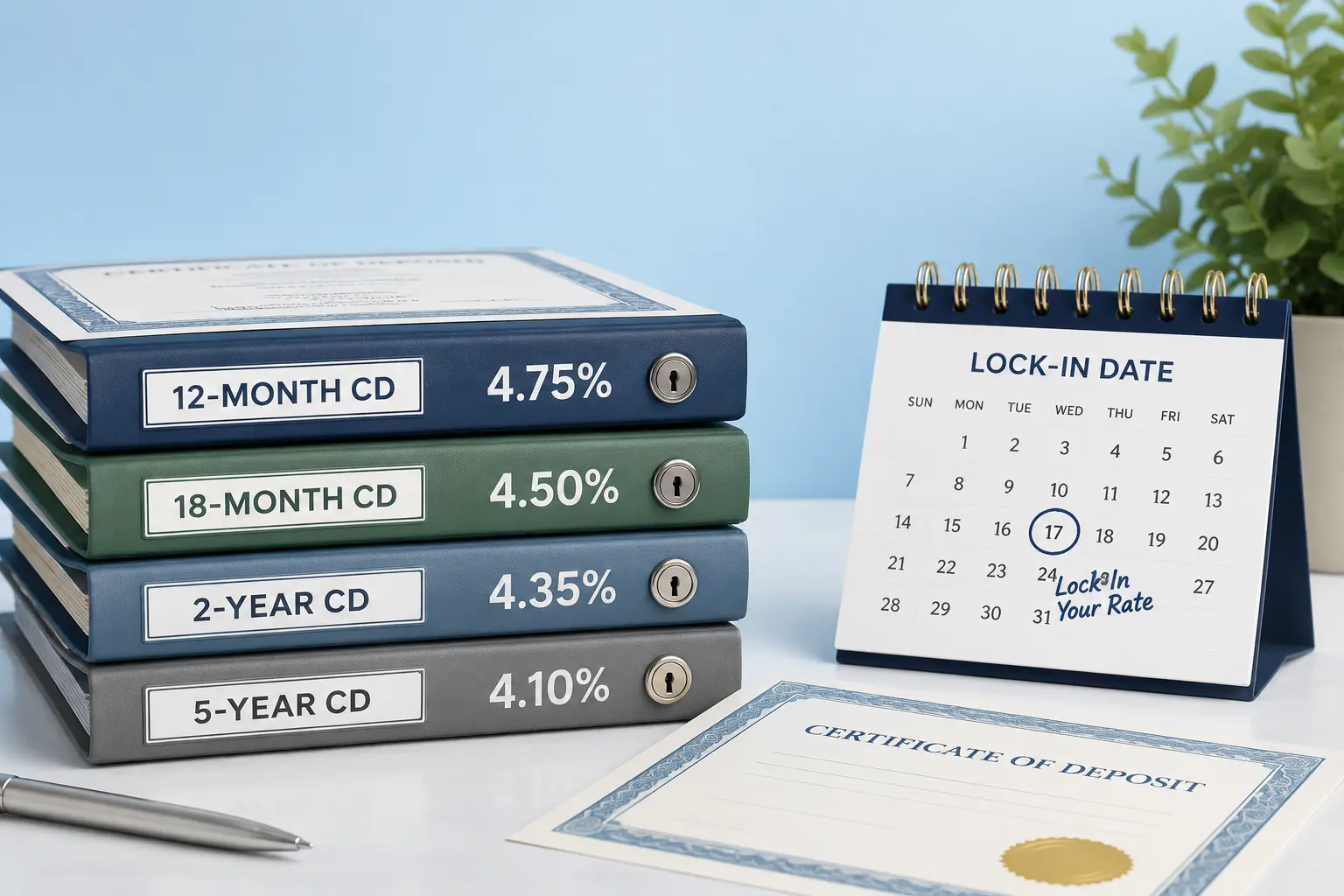
 Best CD Rates 2026: Lock In 5%+ Before Rates Drop
We ranked the best CD rates of 2026 across 6 terms — 3-month to 5-year. CIT Bank leads at 5.10% APY. Full rate table, ladder strategy, and when NOT to use a CD.