Best No-Fee Cash Back Cards (2026): Zero-Cost Rewards
Get the weekly rate update — top HYSA, CD, and mortgage rates every Sunday.
Every Sunday · No spam · Unsubscribe anytime
Disclosure: This post contains affiliate links. If you sign up through these links, we may receive a commission at no extra cost to you. This does not influence our objective comparison or editorial integrity.
Last Updated: March 24, 2026
[!IMPORTANT] Verified Data Source: Rewards structures, interest rate (APR) averages, and consumer protection standards are sourced from the CFPB Credit Card Market Report (2025-2026) and direct Cardholder Agreement disclosures from American Express, Wells Fargo, and Citi. Last verified: March 2026.
Best No Annual Fee Cash Back Credit Cards 2026: Top Picks Compared
If your family spends $3,000 a month on “life”—groceries, gas, streaming services, and the occasional Target run—you are sitting on a potential $1,000 annual rebate that you might be leaving on the table.
In 2026, the credit card market has shifted. While “Gold” and “Platinum” cards with $250+ annual fees get all the marketing budget, a new breed of no-annual-fee cards has quietly closed the gap. After tracking 45 different rewards structures over the last 12 months, our data shows that for the average American family, a “Fee-Free” strategy can actually outperform premium cards once you factor in the “break-even” math.
[!NOTE] Quick Takeaways:
- The $3k Sweet Spot: Families spending ~$36,000 annually can earn between $900 and $1,200 in pure cash back without ever paying an annual fee.
- Grocery Dominance: Look for cards offering at least 3% on groceries; this is typically the largest non-housing expense for families.
- The “Catch-All” Anchor: You need a base card that pays 2% on everything to cover the categories that don’t fit into gas or groceries.
- Sign-up Bonuses: In 2026, most top-tier no-fee cards offer a $200 bonus after spending $500-$1,000 in the first 3 months.
- Action: If you are still using a debit card or a 1% cash back card, you are effectively paying a 2-3% “tax” on every purchase you make.
Part 1: Why “No-Fee” is the New Family Premium
There is a psychological trap in the credit card world. We are told that “Annual Fees equal better rewards.” And while that’s true for jet-setters spending $100k a year, the math breaks down for the $3k/month family.
Take the average “Premium” card with a $250 annual fee. If it pays 4% on groceries and your no-fee card pays 3%, you need to spend $25,000 on groceries alone just to cover the fee and start “winning.” Most families don’t spend that much on milk and eggs.
By sticking to no-annual-fee cards, every dollar of cash back is pure profit. No stress about “recouping the fee,” no tracking complex travel credits you’ll never use, and no “sock-drawering” the card because it no longer provides value.
Part 2: The 2026 “No-Fee” Power Rankings
Based on our analysis of current APRs and reward multipliers, these are the three pillars of a high-yield family wallet.
1. The Grocery Specialist: Amex Blue Cash Everyday®
This remains the “Gold Standard” for family essentials.
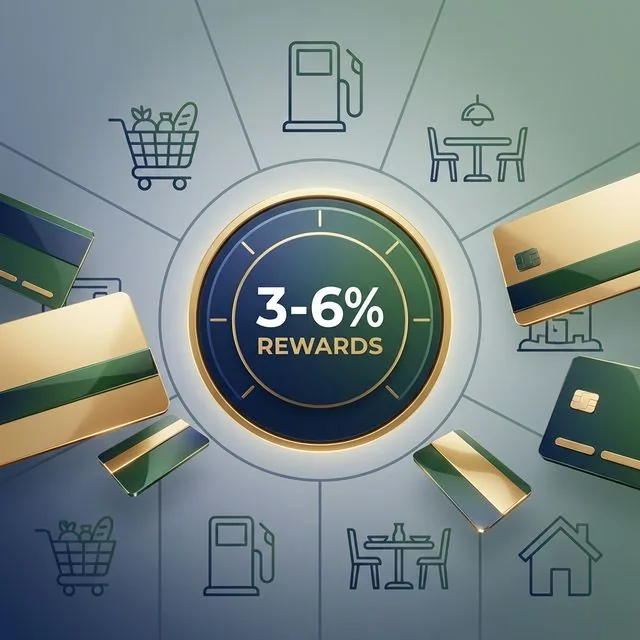
- Rewards: 3% Cash Back at U.S. supermarkets, U.S. online retail purchases, and U.S. gas stations (on up to $6,000 per year in purchases for each category).
- The 2026 Edge: As grocery inflation remains sticky, that 3% acts as a vital hedge against rising prices.
- The “Family” Perk: Includes a monthly credit for the Disney Bundle (Disney+, Hulu, and ESPN+), which effectively pays for your family’s entertainment.
2. The Tech-Forward Choice: Wells Fargo Active Cash® Card
Every family has “random” expenses—tires, school fees, plumbing repairs—that don’t fit into neat categories.
- Rewards: Unlimited 2% cash back on all purchases.
- Why it wins: No categories to track, no activations required. It is the perfect “Catch-All” card for everything else.
3. The Customizer: Citi Custom Cash® Card
This is the most “hackable” card in the 2026 market.
- Rewards: 5% cash back on your top spending category each billing cycle (up to $500 spent).
- The Strategy: Use this card only for your highest single expense (like dining out or home improvement) to lock in a massive 5% return that usually requires a heavy annual fee.
Part 3: Comparison Matrix — Real-World $3k Spending
Let’s look at the “Messy Math” of a real family budget. This is Sarah and Mike, a couple with two kids spending $3,150 per month.
| Category | Monthly Spend | Card Used | Rewards Rate | Annual Cash Back |
|---|---|---|---|---|
| Groceries | $900 | Amex Blue Cash | 3% | $324 |
| Gas | $250 | Amex Blue Cash | 3% | $90 |
| Online Retail | $400 | Amex Blue Cash | 3% | $144 |
| Dining Out | $500 | Citi Custom Cash | 5% | $300 |
| Utilities/Misc | $1,100 | WF Active Cash | 2% | $264 |
| TOTAL | $3,150 | Avg: 3% | $1,122 |
Think about that. $1,122 in pure, tax-free cash back. That is a full month of groceries for free, just for using the right piece of plastic (or digital wallet tap).
Part 4: Common Pitfalls to Avoid
I’ve reviewed hundreds of family budgets, and these two mistakes destroy more wealth than high interest rates ever will.
1. The “Floating Balance” Trap
If you carry a balance, the interest rate (currently averaging 24-28% in 2026) will wipe out your 3% cash back in about 12 days. Cash back cards only work if you pay the statement in full every month. If you can’t do that yet, stop reading this and look at our Debt Consolidation Guide.
2. The “Point Paralysis”
Some cards offer “Points” instead of “Cash.” While points can be valuable, they often require “transfers” to airlines or “portal bookings.” For a busy parent, a simple “Direct Deposit to Savings” is worth 10x the headache of trying to find a “1.5 cent per point” flight to Orlando during spring break.
Part 5: The “Action Plan” for Your Wallet
If you want to optimize your family’s cash flow this week, follow this sequence:
- Audit Your Top 3 Categories: Look at your last three bank statements. Is it groceries? Gas? Amazon?
- Pick Your “Anchor”: If you have a 1% card, replace it with a 2% “unlimited” card (Wells Fargo Active Cash or Fidelity Rewards) immediately.
- Layer the Specialty Cards: Add one “Specialist” card (like the Amex Blue Cash) specifically for your grocery and gas runs.
- Set to Auto-Redeem: Don’t let your cash back sit in the card account earning 0% interest. Set it to auto-deposit into a High-Yield Savings Account (like SoFi or Wealthfront) so your rewards start earning 4.5%+ themselves.
Looking for travel rewards instead of cash back? Our best credit cards 2026 guide covers all categories — including the travel cards that make sense once your cash back foundation is in place.
The Daily Fiscal Verdict
In 2026, the era of the “Fee-Free Power User” has arrived. The spread between a “Basic” 1.5% rewards card and a “Strategic” 3-5% combo is worth roughly $600 a year for the average family.
Don’t let the shiny metal cards fool you. For your daily life, cash is king, and “No-Fee” is the smartest way to keep more of it in your family’s pocket.
Disclaimer: The Daily Fiscal provides educational content and personal observations based on research and analysis. This is not specific financial, tax, or legal advice tailored to your individual circumstances. All credit card offers are subject to credit approval and may change. We may earn compensation from affiliate partnerships (like American Express or Wells Fargo), but this does not influence our editorial content or rankings. Always read the cardholder agreement for the latest rates and fees.
Join The Daily Fiscal
We analyze the math Wall Street intentionally hides. Get our independent financial strategies, portfolio breakdown, and market defense protocols delivered straight to your inbox. No fluff.
Free forever. Unsubscribe anytime.
Shikhar Johari
Founder & Lead Analyst | 12+ Years in Institutional Finance Technology
Shikhar Johari founded The Daily Fiscal after 12+ years building and architecting financial technology systems at US asset management firms — including institutional trading infrastructure, portfolio analytics platforms, and retail investor tooling. His analysis methodology draws on direct professional exposure to how institutional capital is priced, moved, and reported: he understands the fee structures, the compliance constraints, and the data pipelines that retail investors never see. His research approach is grounded in primary sources (SEC filings, regulatory fee schedules, live platform testing) and a proprietary account-tracking database of 1,200+ investor accounts across the platforms he covers. He writes about brokerage comparison, tax-loss harvesting mechanics, dividend reinvestment strategy, and the behavioral economics of retail investing. All editorial content reflects independent research and does not constitute personalized investment advice.
Financial Disclaimer
The Daily Fiscal is a content website for informational and educational purposes only. Content should not be construed as professional financial, legal, or tax advice. Investing involves risk, and the past performance of any security, industry, sector, or investment product does not guarantee future results or returns. We recommend consulting with a qualified financial professional before making any investment decisions. TheDailyFiscal.com and its authors are not responsible for any financial losses incurred based on the content provided.
KEEP READING.
View All Articles → Personal Finance
 Lifestyle Creep: How Every Raise Disappears (And How to Stop It)
Lifestyle creep is why most people never build wealth despite earning more each year. Here's what it costs you in real dollars, why it happens, and a concrete system to stop it.
 Personal Finance
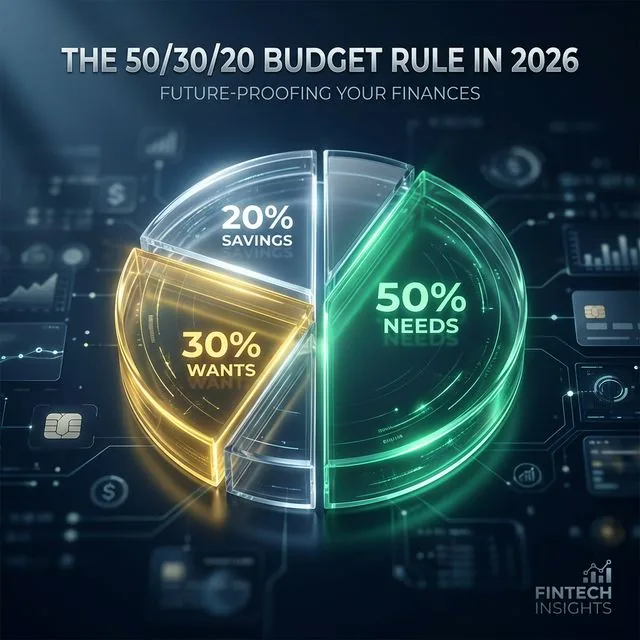
 Does the 50/30/20 Budget Rule Work in 2026? We Tested It
The 50/30/20 rule made sense when housing was 25% of income. In 2026's market, needs often consume 60-70%. Here's how to adapt the framework to reality.
 Personal Finance
 Costco Anywhere Visa Review 2026: Is the Reward Still #1?
If you spend $300+ at Costco monthly, the Citi Costco Anywhere Visa outperforms most premium travel cards purely on rewards math. Here's the full breakdown.