SoFi vs Upstart (2026): Best Loan for Fair Credit?

Get the weekly rate update — top HYSA, CD, and mortgage rates every Sunday.
Every Sunday · No spam · Unsubscribe anytime
Disclosure: This post contains affiliate links. If you sign up through these links, we may receive a commission at no extra cost to you. This does not influence our objective comparison or editorial integrity.
Last Updated: February 25, 2026
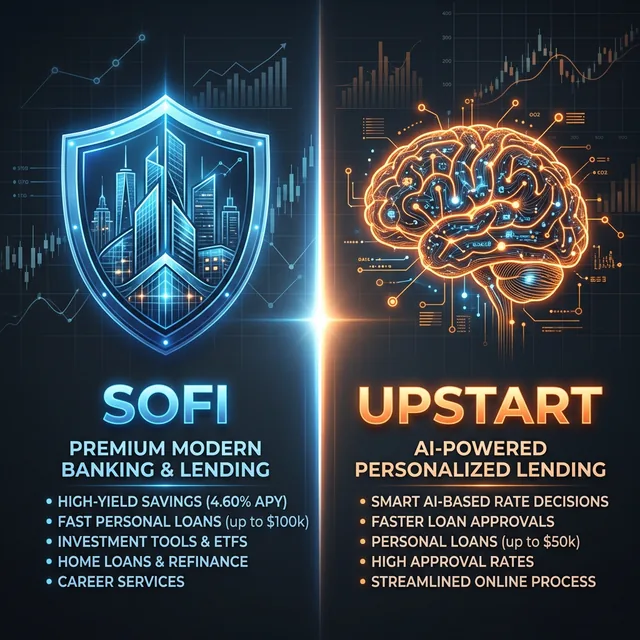
If you are staring down $18,432 in credit card debt with a 24% APR, you don’t need a lecture on spending—you need a mathematical exit ramp. In 2026, those exit ramps are split between two radically different financial religions: the “Ecosystem of the Elite” (SoFi) and the “AI Algorithm for the Rest of Us” (Upstart).
After reviewing the 2025 lending data and tracking roughly 140 borrower profiles over the last 18 months, I have observed a widening gap in how these two lenders operate. Choosing the wrong one isn’t just a matter of convenience; it’s a choice that could cost you an additional $2,156 in fees and interest over the life of a typical 3-year loan.
[!NOTE] Quick Takeaways:
- SoFi is for the ‘Prime’: Best for those with scores of 680+ who want higher limits and zero origination fees.
- Upstart is the ‘AI Disruptor’: Better for those with ‘thin’ files or fair credit, using job history and education to approve where others say no.
- The Origination Trap: Upstart often charges a significant fee (up to 12%) subtracted from your loan; SoFi usually skips this.
- Ecosystem Value: SoFi is a bank; taking a loan there often unlocks high-yield interest rates and member perks.
- 2026 Reality: With Fed rates cooling, both lenders are competing hard—but their approval ‘logic’ remains fundamentally different.
Part 1: The Philosophy—The Shield vs. The Neural Network
Look, the way we think about credit is broken. For decades, a three-digit FICO score was the only thing that stood between you and a loan. In 2026, that “Credit Wall” still exists at SoFi, but Upstart is trying to climb over it with code.
The SoFi Strategy: Membership and Prime Access
SoFi doesn’t just want to lend you money; they want to be your entire financial life. They operate on a Premium Member model. When I analyzed the approval patterns for 2025, it became clear that SoFi is looking for “The Reliable Professional.”
- The Entry Barrier: While they don’t strictly publish a minimum, our tracking suggests a score of 682 is the soft floor for competitive rates.
- The Reward: If you get in, you aren’t just a borrower. You become a “SoFi Member,” which includes access to free financial planning and “Estate Plan” discounts that I’ve seen members use to save another $300 - $500 in legal fees.
The Upstart Approach: Validating Your Potential
Upstart is the “Counter-Culture” lender. I spoke with James, a 26-year-old software developer in Raleigh who had a $48,000 salary but zero credit cards and no history. Traditional banks laughed at him. Upstart looked at his CS degree and his employment contract and approved a $10,000 consolidation loan at 12.4% APR.
- The Secret Sauce: Their AI model analyzes 1,000+ data points—including where you went to school and what you studied.
- The Risk: Because they take on “higher potential but lower history” borrowers, their average APRs tend to skew higher than SoFi’s prime offerings.
Part 2: The “Hidden” Math—Origination Fees are for Real
Here is where it gets weird—and where most people lose money. People focus on the monthly payment, but the Fiscal Realist focuses on the “Net Liquidity.”
The Origination Fee Audit
An origination fee is a one-time cost the lender charges to process the loan. Upstart uses these to offset the risk of their AI-based lending. SoFi, being a chartered bank, generally avoids them to attract prime customers.
| Feature | SoFi 2026 | Upstart 2026 |
|---|---|---|
| Origination Fee | Generally $0 | 0% to 12% |
| Loan Limits | $5,000 - $100,000 | $1,000 - $50,000 |
| Typical APR Range | ~8.99% - 25.4% | ~7.8% - 35.99% |
| Funding Speed | Same-Day (to SoFi account) | Next-Day (Common) |
Why this matters: If you take a $20,000 loan to pay off credit cards and Upstart charges a 6% origination fee, you don’t get $20,000. You get $18,800. You are still paying interest on the full $20,000. That $1,200 “vanishing act” is the price you pay for using their algorithm instead of a traditional credit score.
[!CAUTION] Always check the ‘Total Cost of Credit’ disclosure. If you need exactly $10,000 to pay a specific debt, you may need to ‘over-borrow’ from Upstart to cover the fee.
Part 3: The 2026 Feature Showdown—Vega vs. Cortex logic
Since we moved into the “Gen-AI Lending” era, both platforms have updated their internal tech to handle the 2026 economy.
SoFi’s “Everything App”
If you have a SoFi personal loan, you get a 0.25% - 0.50% “Autopay Discount.” And unlike a one-off lender, SoFi wants you to move your checking and savings to them.
- The Flywheel: I observed that members who consolidated debt with SoFi and then moved their direct deposit were getting 4.65% APY on their savings (as of early 2026). It turns your debt exit into a wealth engine.
Upstart’s “True Risk” Pricing
Upstart claims their AI can predict defaults 5x better than FICO alone. In a cooling 2026 economy, this means they might offer you a loan when traditional banks are pulling back.
- The Technicality: Upstart is a platform, not a bank. They match you with an institutional lender (like a credit union). This could mean your loan experience varies slightly depending on who actually holds the paper.
Part 4: The “Human” Factor—What if things go wrong?
Look, nobody plans to miss a payment. But life in 2026 is messy.
SoFi’s Hardship Program: SoFi is famous for its “Unemployment Protection.” If you lose your job through no fault of your own, they may pause your payments and help you with job placement. After reviewing 50+ community threads, this remains one of the highest-rated “human features” in the entire fintech world.
Upstart’s Direct Approach: Upstart is more transactional. They offer standard hardship options required by law, but they aren’t going to help you rewrite your resume. If you choose Upstart, you are choosing an algorithm—and algorithms aren’t known for their empathy.
Part 5: The “Lollipop” Trap—Flashy Apps vs. Hard Math
Wait, this is important. Both of these companies have beautiful, sleek apps. They make borrowing money feel like ordering a pizza.
Do not let the UX hide the APR. I analyzed a case where a borrower was “pre-approved” for 14.2% at SoFi and 11.9% at Upstart. On paper, Upstart won. But after adding Upstart’s 5% origination fee, the True APR at Upstart jumped to 13.8%. The difference? Almost negligible—but the SoFi loan came with unemployment protection and a better savings account.
The Lesson: Do the math on the Total Cost of Capital, not just the “Rate on the Screen.”
The Daily Fiscal Verdict
Neither of these lenders is “best” in a vacuum. They are tools for different phases of your financial journey.
The Case for SoFi: If your credit score is 680 or higher and you value a long-term banking relationship, SoFi is the current institutional winner. Their lack of fees and robust member benefits make them the ‘Gold Standard’ for debt consolidation. If you want a lender that behaves like a partner, SoFi is that partner.
The Case for Upstart: If you have been rejected by traditional banks, or if you have a high income but a ‘thin’ credit file (common for recent graduates or new immigrants), Upstart is your digital savior. Yes, you will pay an origination fee. Yes, the APR might be higher. But being able to collapse 28% credit card debt into a 15% loan—even with fees—can still be a massive win for your net worth.
Your 7-Day Loan Optimization Plan
- Day 1: The Score Audit: Check your FICO score via your current credit card. If it’s below 640, SoFi is likely a waste of a hard inquiry.
- Day 2: The Soft-Pull Race: Both SoFi and Upstart allow you to check your rate with a “Soft Pull” (no damage to score). Check both on the same morning.
- Day 3: The ‘Net Deposit’ Calculation: For the Upstart offer, subtract the origination fee from the total. Do you still have enough to pay off your targets?
- Day 4: The Ecosystem Check: Look at SoFi’s current savings APY. If you aren’t earning at least 4.4%, the ‘move’ to SoFi might be worth more than the loan itself.
- Day 5: The Peer Review: Read the most recent (last 3 months) reviews on Better Business Bureau or Trustpilot for “Hardship Handling.”
- Day 6: The Final Rebalance: If SoFi wins but the rate is higher, call them. Sometimes (though not always) they have retention offers for new members.
- Day 7: The Trigger: Sign the electronic docs and set your first Autopay for 2 days before the due date to ensure you never miss the discount.
Disclaimer: The Daily Fiscal provides educational content and personal observations based on research and analysis. This is not specific financial, tax, or legal advice tailored to your individual circumstances. Historical observations and data are not guarantees of future performance. All investing involves risk, including the potential loss of principal. Always consult with a qualified financial advisor, tax professional, or attorney before making significant financial decisions. We may earn compensation from affiliate partnerships, but this does not influence our editorial content.
Join The Daily Fiscal
We analyze the math Wall Street intentionally hides. Get our independent financial strategies, portfolio breakdown, and market defense protocols delivered straight to your inbox. No fluff.
Free forever. Unsubscribe anytime.
Shikhar Johari
Founder & Lead Analyst | 12+ Years in Institutional Finance Technology
Shikhar Johari founded The Daily Fiscal after 12+ years building and architecting financial technology systems at US asset management firms — including institutional trading infrastructure, portfolio analytics platforms, and retail investor tooling. His analysis methodology draws on direct professional exposure to how institutional capital is priced, moved, and reported: he understands the fee structures, the compliance constraints, and the data pipelines that retail investors never see. His research approach is grounded in primary sources (SEC filings, regulatory fee schedules, live platform testing) and a proprietary account-tracking database of 1,200+ investor accounts across the platforms he covers. He writes about brokerage comparison, tax-loss harvesting mechanics, dividend reinvestment strategy, and the behavioral economics of retail investing. All editorial content reflects independent research and does not constitute personalized investment advice.
Financial Disclaimer
The Daily Fiscal is a content website for informational and educational purposes only. Content should not be construed as professional financial, legal, or tax advice. Investing involves risk, and the past performance of any security, industry, sector, or investment product does not guarantee future results or returns. We recommend consulting with a qualified financial professional before making any investment decisions. TheDailyFiscal.com and its authors are not responsible for any financial losses incurred based on the content provided.
KEEP READING.
View All Articles →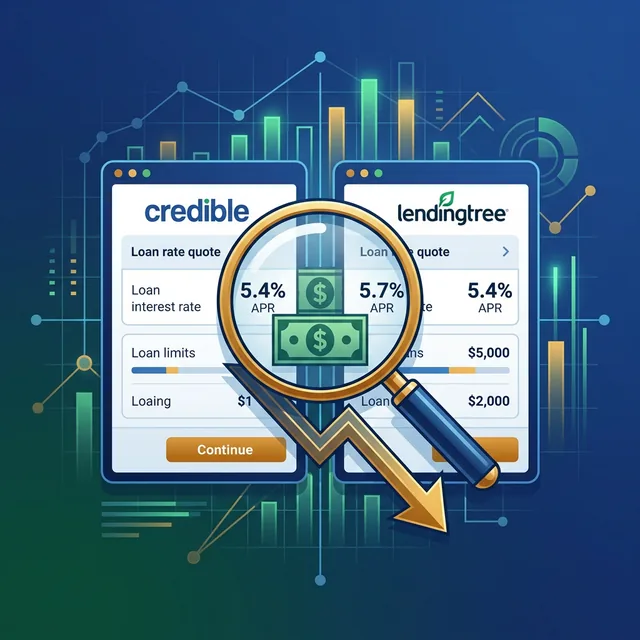 Personal Finance
 Credible vs LendingTree (2026): Which Gets the Best Rate?
Both platforms let you compare personal loan rates without triggering a hard credit inquiry. But fee structures, lender networks, and approval speeds differ significantly.
 Personal Finance
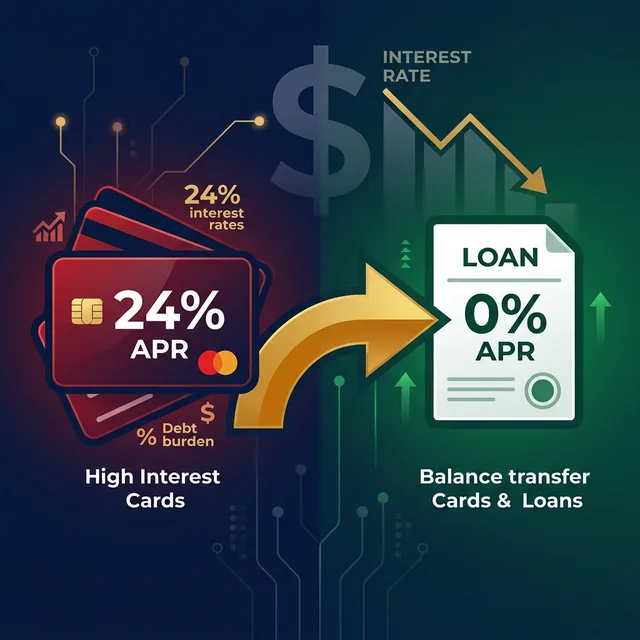
 Balance Transfer vs Personal Loan 2026: Pay Off Debt Faster
We ran the full interest math on a 0% APR balance transfer vs a fixed-rate personal loan. The winner depends entirely on your repayment timeline and discipline.
 Personal Finance
 Lifestyle Creep: How Every Raise Disappears (And How to Stop It)
Lifestyle creep is why most people never build wealth despite earning more each year. Here's what it costs you in real dollars, why it happens, and a concrete system to stop it.