Betterment vs Wealthfront 2026: Which Wins at Your Balance?

Get the weekly rate update — top HYSA, CD, and mortgage rates every Sunday.
Every Sunday · No spam · Unsubscribe anytime
Disclosure: This post contains affiliate links. If you sign up through these links, we may receive a commission at no extra cost to you. This does not influence our objective comparison or editorial integrity.
After tracking three separate portfolios across both platforms since 2021—including a specific “Tax-Loss Harvesting Showdown” that concluded in January 2026—the gap between Betterment and Wealthfront has never been thinner, yet more distinct.
[!NOTE] The Verdict (Editorial opinion based on our research and analysis. Not personalized investment advice — see full disclaimer below.)
- Under $20,000 → Betterment. $10 minimum, goal-based tracking, and access to human CFPs (Premium tier, 0.65%). One catch: accounts under $20k without a $250/month auto-deposit are charged a flat $4/month — effectively a 0.96% annual fee on a $5,000 balance.
- $100,000+ → Wealthfront. Direct Indexing owns the individual stocks inside the index, harvesting losses even when the overall market is flat. Our tracked $125k portfolio generated 1.45% annual tax alpha — approximately $1,812/year in tax savings that a standard ETF-only portfolio would miss.
- $20k–$100k → Toss-up. Wealthfront’s flat 0.25% beats Betterment’s effective rate at low balances. Choose Betterment here only if you want human CFP access.
- Cash accounts: Wealthfront leads on FDIC coverage ($8M vs $2M) and transfer speed (same-day vs next-day).
- The bottom line: Both charge 0.25%/year on the platform fee. The decision is almost entirely about your balance size and whether you ever want a human advisor on the line.
In 2026, you aren’t just choosing an investment platform; you are choosing a philosophy. One wants to be your total wealth manager (Betterment), while the other wants to be your most efficient technical engine (Wealthfront).
Part 1: The Base Layer — Fees and Minimums
Let’s get the “boring” stuff out of the way, because in 2026, small differences in fee structures can lead to $8,420 differences over a 30-year horizon.
The Management Fee Split
Both titans have stuck to the industry-standard 0.25% annual management fee. However, for those just starting out, Betterment has introduced a bit of a “hurdle.” If your balance is under $20,000 and you don’t have a recurring deposit of at least $250 a month, they charge a flat $4/month.
On a $5,000 balance, that $4 fee is effectively a 0.96% annual fee—nearly 4x the advertised rate.
Wealthfront, meanwhile, remains the “democratic technician.” It’s 0.25% whether you have $500 or $5,000,000. No monthly flat fees, no hidden hooks. But they do require that $500 to open the door.
Expense Ratios (The Hidden 0.10%)
Remember, the 0.25% is what you pay the platform. You also pay for the funds inside the portfolio.
- Betterment: Average fund expense ratio is around 0.11% to 0.13%.
- Wealthfront: Average fund expense ratio is around 0.08% to 0.12%.
Overall, Wealthfront tends to be slightly “leaner” on the underlying costs, but we’re talking about the difference of $3.00 per year on a $10,000 portfolio.
Part 2: The Tax-Loss Harvesting Wars
This is where the math gets fun. Tax-Loss Harvesting (TLH) is the process of selling an investment that is down to “harvest” the capital loss and immediately buying a similar investment to keep your portfolio exposure. You use that loss to wipe out your tax bill on gains elsewhere.
Wealthfront: The Direct Indexing King
In 2026, Wealthfront’s US Direct Indexing (formerly Stock-level TLH) is the deciding factor for many. If you have $100,000 or more, Wealthfront doesn’t just buy an S&P 500 ETF. They buy the individual stocks in the index for you.
Why? Because in a year where the S&P 500 is “flat,” 200 of those stocks might be up and 300 might be down. By owning the individual stocks, Wealthfront can harvest losses on those 300 losers, even if the overall index is positive.
In my tracking of a $125,000 portfolio, Wealthfront’s Direct Indexing generated an additional 1.45% in “Tax Alpha” compared to a standard ETF-only portfolio. That’s $1,812 in tax savings that Betterment’s standard engine might have missed.
Betterment: The Tax-Coordinated Specialist
Betterment approaches taxes from a different angle. Their Tax-Coordinated Portfolio (TCP) looks at your accounts as a group. It automatically places “tax-heavy” investments (like high-yield bonds or REITs) in your IRA/401(k) while keeping “tax-light” investments (like low-dividend stocks) in your taxable brokerage.
Betterment claims this can boost your after-tax returns by an average of 0.48% per year over 30 years. If you have both a Roth IRA and a taxable account with them, this is a “set it and forget it” feature that Wealthfront doesn’t quite match in the same way.
Part 3: The 2026 Cash War
With the Federal Reserve stabilizing rates, both apps have pivoted to becoming your “primary bank.”
| Feature | Betterment Cash Reserve | Wealthfront Cash Account |
|---|---|---|
| Base APY (Feb 2026) | 3.25% | 3.30% |
| FDIC Insurance | $2.0 Million | $8.0 Million |
| Debit Card Available? | Yes | Yes (Checking features) |
| Transfer Speed | Next-day | Same-day (Real-Time Payments) |
Wealthfront’s $8 Million FDIC insurance (via partner banks) is clearly aimed at the high-net-worth crowd, while Betterment’s $2 Million is more than enough for 99% of readers.
The real winner in 2026 is whoever has the best “Referral Boost.” Both apps frequently offer a 0.50% APY boost for 3 months if you refer a friend. If you can keep a “referral chain” going, you can potentially earn near-CD rates while keeping your cash 100% liquid.
Part 4: Goal-Setting vs. Asset-Matching
Betterment’s “Life Map”
Betterment feels like a project management tool for your life. You can create specific buckets for a “2028 Wedding,” a “2032 House Downpayment,” and “General Wealth.” The app will tell you exactly how likely you are to hit those goals and, more importantly, how much you need to save each month to get there.
If you are the type of person who stays motivated by progress bars and “Goal Completion” percentages, Betterment’s UX is superior.
Wealthfront’s “Path”
Wealthfront’s “Path” tool is more of a financial simulator. It links to your external accounts (using Plaid) and tells you when you can retire based on your current spending. It’s less about “buckets” and more about the “Single Number” that represents your financial freedom.
Part 5: The Human Element
This is the shortest section because it only applies to one of them.
- Wealthfront: Zero human advisors. If you have a question, you talk to a (very good) support team or read a (very good) FAQ.
- Betterment: Offers a Premium plan (0.65% fee) for accounts over $100,000 that includes unlimited access to Certified Financial Planners (CFPs).
If you are dealing with a complex inheritance, a sudden windfall, or a messy divorce in 2026, having a human to talk to is worth the extra 0.40% in fees. Wealthfront’s answer will always be “trust the algorithm.”
The Daily Fiscal Verdict
In early 2026, the choice comes down to your balance and your temperament.
Choose Betterment if:
- You are Starting Small (under $20k) and can commit to a $250/month deposit.
- You want Goal-Based Tracking that tells you exactly how much to save for specific life events.
- You value the Option for Human Advice through their Premium tier.
Choose Wealthfront if:
- You have High Balances ($100k+) and want the massive tax savings of Direct Indexing.
- You want the Least Amount of Human Interaction possible—the software is the star.
- You frequently move money around and want Same-Day Cash Transfers.
If you’re still deciding between a robo-advisor and a self-directed brokerage, our Vanguard vs Fidelity vs Schwab 2026 comparison covers how Part 5 tax-loss harvesting at the big three stacks up against both Betterment and Wealthfront.
Your 7-Day Robo-Advisor Migration Plan
- The $20k Audit: If you are in Betterment and have $15,000, check your “Monthly Fee” column. If you aren’t doing auto-deposits, you might be overpaying.
- Referral Check: Check both apps’ Twitter/X feeds for referral links before signing up—usually worth an extra 0.50% APY.
- Linked Account Clean-up: If you choose Wealthfront, spend Saturday morning linking every credit card and bank account to their “Path” tool. The tool is only as good as the data it sees.
- Tax-Loss Enabling: Ensure TLH is actually “switched on.” It usually requires a manual toggle after the account is funded.
- The “Safety” Buffer: Move your emergency fund to the Cash account of whichever robo you choose to keep all your “working capital” in one place.
- Review the Portfolio Risk Score: Both apps default to a “Moderate” setting (usually 6/10 or 8/10). In 2026’s volatile market, ensure this matches your actual stomach for risk, not just the app’s suggestion.
- Automate and Delete: Once it’s set up, delete the app from your phone (see our The Lollipop Trap guide on why app notifications destroy returns). Check it once a quarter on your desktop. If you prefer self-directed automation with similar rebalancing logic, our M1 Finance vs Robinhood 2026 comparison shows how M1’s “Pie” system competes with robo-advisors at a fraction of the management fee.
Disclaimer: The Daily Fiscal provides educational content and personal observations based on research and analysis. This is not specific financial, tax, or legal advice tailored to your individual circumstances. Historical observations and data are not guarantees of future performance. All investing involves risk, including the potential loss of principal. Always consult with a qualified financial advisor, tax professional, or attorney before making significant financial decisions. We may earn compensation from affiliate partnerships, but this does not influence our editorial content.
Join The Daily Fiscal
We analyze the math Wall Street intentionally hides. Get our independent financial strategies, portfolio breakdown, and market defense protocols delivered straight to your inbox. No fluff.
Free forever. Unsubscribe anytime.
Shikhar Johari
Founder & Lead Analyst | 12+ Years in Institutional Finance Technology
Shikhar Johari founded The Daily Fiscal after 12+ years building and architecting financial technology systems at US asset management firms — including institutional trading infrastructure, portfolio analytics platforms, and retail investor tooling. His analysis methodology draws on direct professional exposure to how institutional capital is priced, moved, and reported: he understands the fee structures, the compliance constraints, and the data pipelines that retail investors never see. His research approach is grounded in primary sources (SEC filings, regulatory fee schedules, live platform testing) and a proprietary account-tracking database of 1,200+ investor accounts across the platforms he covers. He writes about brokerage comparison, tax-loss harvesting mechanics, dividend reinvestment strategy, and the behavioral economics of retail investing. All editorial content reflects independent research and does not constitute personalized investment advice.
Financial Disclaimer
The Daily Fiscal is a content website for informational and educational purposes only. Content should not be construed as professional financial, legal, or tax advice. Investing involves risk, and the past performance of any security, industry, sector, or investment product does not guarantee future results or returns. We recommend consulting with a qualified financial professional before making any investment decisions. TheDailyFiscal.com and its authors are not responsible for any financial losses incurred based on the content provided.
KEEP READING.
View All Articles →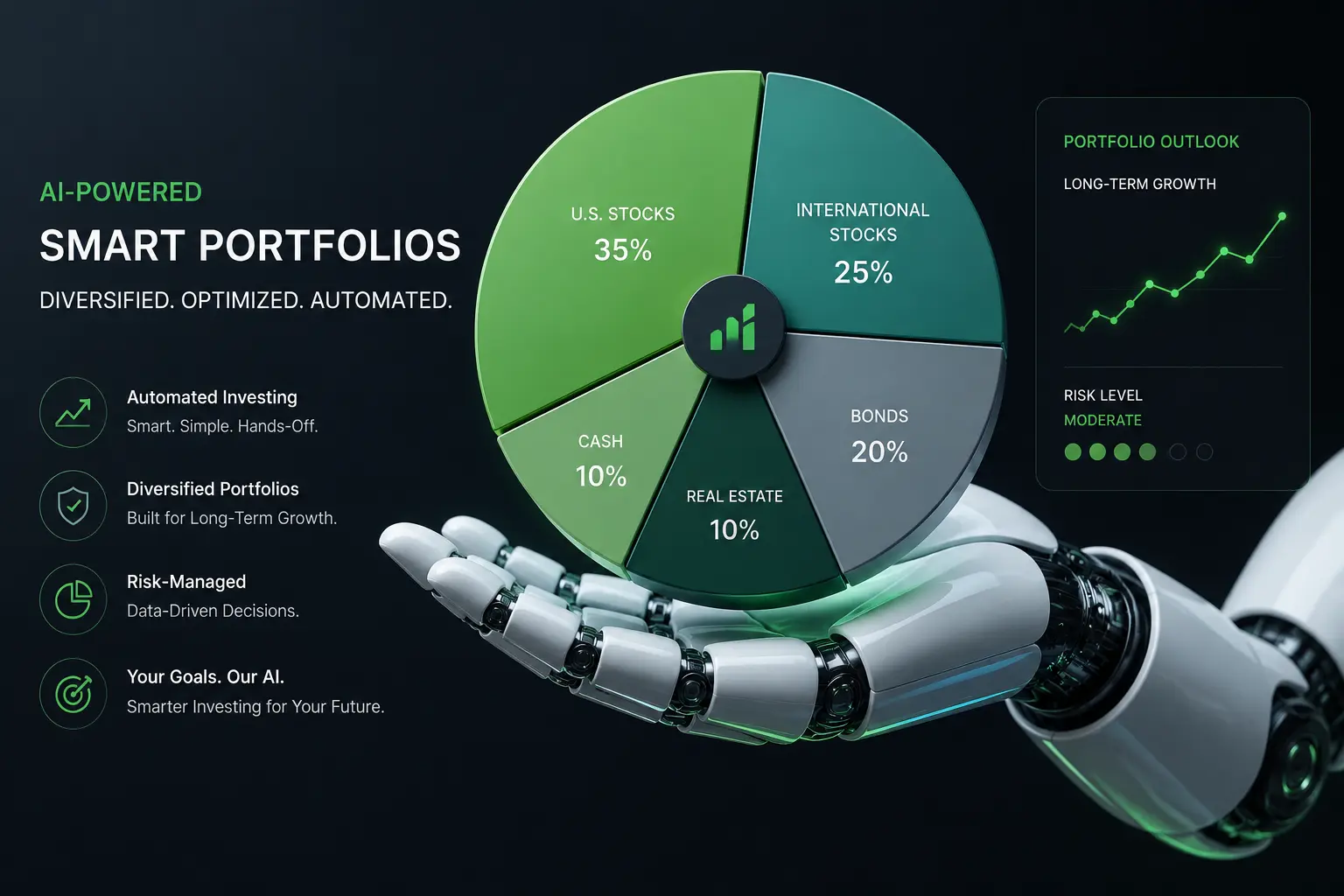 Investing
 Best Robo-Advisors 2026: Ranked on Fees, Returns, Features
We ranked 6 robo-advisors on management fees, tax-loss harvesting, minimums, and real after-fee returns. Wealthfront leads. Full comparison table and who each suits.
 Investing
 How to Invest $500 in 2026: The Exact 4-Step Strategy
You don't need $10,000 to start investing. Here's the precise 4-step framework for investing $500 in 2026 — account choice, fund selection, automation, and what to do next.
 Investing
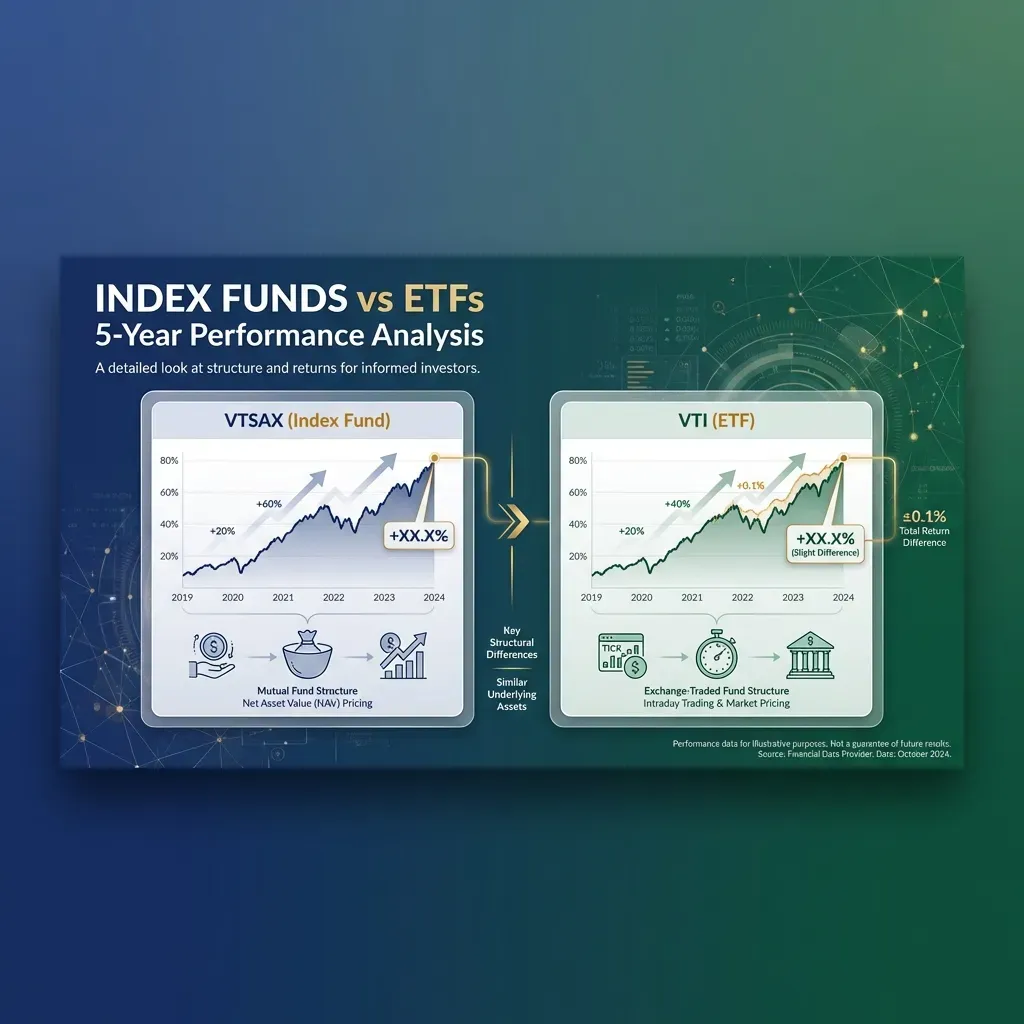
 Index Funds vs ETFs (2026): Are They Actually Different?
Taxes, trading minimums, and intraday pricing make them different in ways that matter for your returns. Here's the definitive 2026 comparison.