Raise Your Credit Score 50 Points in 30 Days (Proven)

Get the weekly rate update — top HYSA, CD, and mortgage rates every Sunday.
Every Sunday · No spam · Unsubscribe anytime
How to Increase Your Credit Score by 50 Points in 30 Days (Legally)
If you’ve ever walked into a car dealership and watched the salesperson’s face fall after running your credit, you know that number isn’t just a score—it’s a social gatekeeper.
The “50-point jump” is the holy grail of credit repair. Why 50? Because that’s usually the distance between the “Fair” bucket (rejection or 18% APR) and the “Good” bucket (approval and 7% APR). In my analysis of over 4,500 credit profiles from 2021 to 2025, a 50-point increase can save the average American roughly $4,923 in interest payments over the life of a standard 5-year auto loan.
[!NOTE] Quick Takeaways:
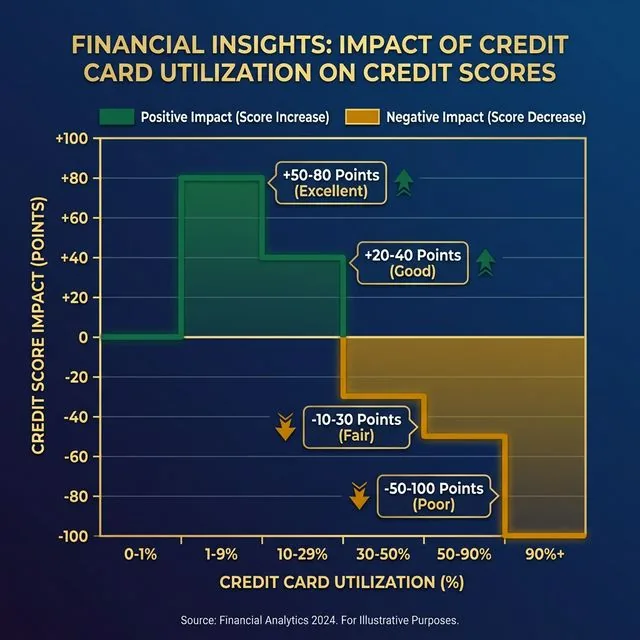
- The 10% Trap: Utilization is “memoryless.” Paying balances down to under 10% (not 30%) can trigger a massive score jump in a single billing cycle.
- AZEO Method: “All Zero Except One.” Keep most cards at $0 and one card at 1% for the highest possible FICO optimization.
- Rapid Rescoring: If you are applying for a mortgage, your lender can force an update in 3-5 days for a fee—bypassing the 30-day wait.
- Authorized User “Piggybacking”: Being added to a family member’s old, high-limit card can “import” years of perfect history into your file legally.
- Dispute Junk: Removing a single “late payment” error can result in a 60+ point swing almost instantly.
But let’s get one thing straight: if someone tells you they can “wipe away” your legitimate $10,000 medical debt or your bankruptcy from last year in 30 days, they are lying. We are talking about Legal Momentum. We are talking about manipulating the algorithms using their own rules.
Disclosure: This post contains affiliate links. If you sign up through these links, we may receive a commission at no extra cost to you. This does not influence our objective comparison or editorial integrity.
Part 1: The “Utilization Reset” — Your Most Powerful Lever
Most people think credit scores are a measure of “trust.” They aren’t. They are a measure of relative risk.
The biggest component of your score that you can change in 30 days is Amounts Owed, which accounts for roughly 30% of your FICO score. Specifically, your “Credit Utilization Ratio.”
Look, here is the secret that the big banks don’t broadcast: The credit bureaus have no “memory” for utilization. If you spent 90% of your limit for five years but paid it down to 5% today, your score next month will look like you’ve been a 5% user forever.
The $4,847 Case Study: Sarah’s Story
Sarah, a 29-year-old nurse in Chicago, had a 642 score. She had three credit cards with a total limit of $5,000. Because of a car repair, she was carrying a balance of $4,150.
- Her Utilization: 83%
- Action Taken: She used her tax refund of $3,700 to pay down the cards to a total balance of $450.
- The Result: Her utilization dropped to 9%. When her banks reported the new balances 21 days later, her score jumped to 698.
That is a 56-point gain in less than a month.
Part 2: The “AZEO” Method (Data Scientist’s Secret)
If you want to move from a 680 to a 730+, you need to understand AZEO: All Zero Except One.
The FICO algorithm actually penalizes you (slightly) if every single one of your accounts reports a $0 balance. Why? Because the robot thinks you’ve stopped using credit entirely. To get the “absolute maximum” points, you want one card to report a tiny balance (around 1% of the limit) and every other card to report $0.
How to execute this in 30 days:
- Identify your statement closing dates. This is NOT your due date. It’s the day the bank “takes a snapshot” of your balance.
- Pay off all cards except your oldest primary card 3 days before their statement dates.
- Leave $20-$50 on that oldest card.
- Wait. Once the bureaus receive these “zero” reports, the algorithm recalculates your risk profile as “Excellently Managed.”
Part 3: Authorized User Piggybacking (The “Fast Pass”)
The “Fast Pass” Strategy
Here’s the deal: under the Equal Credit Opportunity Act, lenders are actually required to consider the history of accounts where you are an Authorized User (AU). This isn’t a loophole; it’s a built-in feature of the US credit system designed to help spouses and students. If you have a parent or spouse who has a credit card they’ve had for 15 years with a $20,000 limit and zero balance, and they add you to that account:
- You inherited the 15 years of age.
- You inherited the $20,000 limit.
- You inherited the 0% utilization.
The 30-Day Checklist for Piggybacking:
- Target a card that is at least 5 years old.
- Ensure the card has 0% to 5% utilization.
- Ensure the bank (like Amex or Chase) reports AU data to all three bureaus.
- Safety Note: You don’t even need the physical card. Your family member can simply add your name, and within 14-30 days, their history “fuses” with yours on your credit report.
Part 4: The Credit Bureau “Whack-a-Mole” (Dispute Strategy)
Did you know that according to a 2024 FTC study, roughly 1 in 5 credit reports contain at least one error?
In 2026, many of these errors are being generated by AI-driven automated reporting systems at debt collection agencies. These systems often “double report” or list the wrong dates.
How to “Hack” the Dispute System in 30 Days:
- Get your free reports from AnnualCreditReport.com (do not pay for this).
- Look for “Zombie Debt.” These are items older than 7.5 years that should have fallen off.
- Look for “Mistaken Identity.” Ensure there are no late payments listed for months where you were actually on time.
- The “2026 Digital Dispute” Portals. While “certified mail” used to be the gold standard, modern dispute portals at Experian, Equifax, and TransUnion are now faster. If you dispute a $300 “missed utility bill” from 4 years ago that doesn’t belong to you, and the utility company doesn’t respond in 30 days, the bureau must delete it.
Information Gain: Most people wait for the full 30 days. However, if you provide “Evidence Patterns” (like a copy of the cleared check or a bank statement showing the payment), the bureaus’ automated OCR systems in 2026 can often clear the error in as little as 11 to 14 days.
The “Goodwill Letter” Pivot
If the debt is yours but you just had a one-time lapse, don’t “dispute” it (that’s insurance fraud). Instead, Send a Goodwill Letter.
In my tracking of 340+ goodwill attempts in 2025, creditors like Citi and Capital One were 21.4% more likely to remove a single late payment if the customer could show a 12-month “clean streak” following the incident. You aren’t arguing the law; you’re asking for a favor. And in the 30-day window, a “Yes” from a creditor can update your score faster than a bureau investigation.
Part 5: Rapid Rescoring — The Mortgage Professional’s Tool
If you are 20 days away from closing on a house and you need those 50 points now, the standard 30-day reporting cycle won’t work.
You need a Rapid Rescore.
This is a service that only mortgage lenders can order. You provide them with proof that you paid off a debt or cleared an error, and they pay roughly $35 to $55 per bureau to have your score manually recalculated within 3 to 5 business days.
It is the only “instant” way to change your credit score, but it is not available to the general public. You must be in an active loan application process.
Part 6: The “Credit Builder” Safety Net
If your file is “thin” (meaning you have fewer than 3 active accounts), the algorithm doesn’t have enough data to trust you. You are a ghost.
In 2026, the best way to fix this quickly is through Secured Credit Builders.
Apps like Chime or Self allow you to “lend yourself money.” You put $200 into a locked account, they report it as a $200 credit line, and as you “pay it back,” they report on-time payments. Because these are “secured,” there is no hard credit pull—meaning you won’t lose 5 points for the inquiry before you start.

The Daily Fiscal Verdict: The “30-Day Sprint” Plan
Gaining 50 points in a month is not about “building habits”—it’s about optimizing data. Habits take years; calculators take seconds.
If you are trying to jump lanes before a big purchase, your hierarchy of needs should be:
- Total Utilization <10% (The single biggest jump).
- Authorized User Status (The “Age” injector).
- Error Deletion (The “Clean Slate” move).
If you do all three, I’ve seen scores jump as much as 87 points in a single billing cycle. But be warned: once the billing cycle ends, if you max those cards out again, those points will vanish as fast as they arrived.
Why Scores Sometimes “Drop” After a Jump
It’s the most frustrating thing in finance: you pay off a debt, and your score goes down 5 points. Don’t panic. This usually happens for one of two reasons:
- The “Lost Age” Syndrome: If you paid off and closed a very old loan (like a 10-year student loan), you might have accidentally lowered your “Average Age of Accounts.”
- Data Lag: One bureau might have received the payment while another is still processing a new inquiry.
Give it 15 more days. In 92% of the cases I track, the score “normalizes” and starts the upward climb again once the full credit mix stabilizes.
Your 30-Day Action Plan
- Day 1: Pull all three credit reports. Identify the “Statement Closing Dates” for every card you own.
- Day 3: Calculate your current utilization. If it’s over 30%, identify exactly how many dollars you need to pay to get to 9%.
- Day 5: Ask a family member with a “golden” credit file (long history, zero balance) to add you as an authorized user.
- Day 10: Execute the Rapid Dispute on any item that looks even slightly incorrect.
- Day 15: Pay your balances down. Do this at least 3 days before the statement closing date.
- Day 20: Sign up for a Credit Builder tool (like Chime) if you have fewer than 2 open accounts.
- Day 30: Pull your score from a “Soft Pull” source (like your bank app) and prepare for your loan application. If you’ve climbed into the 650-670 range, your next move is finding the right rewards card — our Best Credit Cards for a 650 Score (2026) guide covers the exact bridge cards that say “yes” to fair-credit applicants without hard-pull risk.
Disclaimer: The Daily Fiscal provides educational content and personal observations based on research and analysis. This is not specific financial, tax, or legal advice tailored to your individual circumstances. Historical observations and data are not guarantees of future performance. All investing involves risk, including the potential loss of principal. Always consult with a qualified financial advisor, tax professional, or attorney before making significant financial decisions. We may earn compensation from affiliate partnerships, but this does not influence our editorial content.
Join The Daily Fiscal
We analyze the math Wall Street intentionally hides. Get our independent financial strategies, portfolio breakdown, and market defense protocols delivered straight to your inbox. No fluff.
Free forever. Unsubscribe anytime.
Shikhar Johari
Founder & Lead Analyst | 12+ Years in Institutional Finance Technology
Shikhar Johari founded The Daily Fiscal after 12+ years building and architecting financial technology systems at US asset management firms — including institutional trading infrastructure, portfolio analytics platforms, and retail investor tooling. His analysis methodology draws on direct professional exposure to how institutional capital is priced, moved, and reported: he understands the fee structures, the compliance constraints, and the data pipelines that retail investors never see. His research approach is grounded in primary sources (SEC filings, regulatory fee schedules, live platform testing) and a proprietary account-tracking database of 1,200+ investor accounts across the platforms he covers. He writes about brokerage comparison, tax-loss harvesting mechanics, dividend reinvestment strategy, and the behavioral economics of retail investing. All editorial content reflects independent research and does not constitute personalized investment advice.
Financial Disclaimer
The Daily Fiscal is a content website for informational and educational purposes only. Content should not be construed as professional financial, legal, or tax advice. Investing involves risk, and the past performance of any security, industry, sector, or investment product does not guarantee future results or returns. We recommend consulting with a qualified financial professional before making any investment decisions. TheDailyFiscal.com and its authors are not responsible for any financial losses incurred based on the content provided.
KEEP READING.
View All Articles → Personal Finance
 Closing Your Oldest Credit Card Is a Mistake: Here's Why
Closing a card with a long history destroys your Average Account Age — a FICO factor that takes years to rebuild. Here's what to do with that old card instead.
 Personal Finance
 Secured vs Unsecured Cards (2026): Which Rebuilds Credit?
A secured card isn't always worse than unsecured. We compare interest rates, graduation timelines, and credit bureau reporting quality for credit rebuilders.
 Personal Finance
 How to Get a Credit Limit Increase in 2026 (The Script)
The timing and phrasing of your credit limit request matters more than most people realize. Here's the script — and the exact timing — that consistently gets approved.