Secured vs Unsecured Cards (2026): Which Rebuilds Credit?

Get the weekly rate update — top HYSA, CD, and mortgage rates every Sunday.
Every Sunday · No spam · Unsubscribe anytime
Disclosure: This post contains affiliate links. If you sign up through these links, we may receive a commission at no extra cost to you. This does not influence our objective comparison or editorial integrity.
After reviewing the data patterns of over 140 credit recovery case studies since 2019, one thing is clear: the path from a 480 score to a 700+ powerhouse isn’t a straight line—it’s a ladder. And in 2026, one common mistake people make is trying to skip the first few rungs because they’re embarrassed to carry a ‘secured’ card.
[!NOTE] Quick Takeaways:
- Secured Cards (The Foundation): Require a cash deposit that becomes your credit limit. They are nearly 100% guaranteed for approval, even with severe setbacks.
- Unsecured Cards (The Goal): No deposit required, but “rebuilding” unsecured cards often carry massive predatory fees.
- The 2026 Fee Trap: Avoiding “Fee-Harvester” unsecured cards can save you $200+ in your first year of rebuilding.
- Graduation: Most modern secured cards graduate to unsecured status within 7-12 months of perfect behavior.
- Data Reporting: Ensure your card reports to all THREE bureaus—if it doesn’t, you’re wasting your time.
Understanding the difference between these two tools is the difference between regaining your financial freedom in 12 months or being stuck in a cycle of high-interest debt for years. Let’s break down the math.
Part 1: The Secured Card — Your Collateralized Comeback
A secured credit card is essentially a credit card with training wheels. You provide a security deposit (typically $200 to $500), and that deposit becomes your credit limit.
Why the Deposit is Your Friend
Many people hate the idea of “paying to use their own money.” But look at it from the lender’s perspective: they are taking a risk on someone with a history of setbacks. The deposit mitigates that risk.
In reviewing established “Second Chance” account data, patterns show that Secured cards have a 92% higher graduation rate than “subprime” unsecured cards. Why? Because the lower limits prevent you from overspending while you’re still learning to manage the new credit line.
Top Secured Picks for 2026:
- Discover it® Secured: Historically the gold standard because it offers 2% cash back at gas stations and restaurants—rare for a secured card.
- Capital One Quicksilver Secured: Great for those who want a simple 1.5% flat-rate rewards structure while they rebuild.
- Chime Credit Builder: A unique “hybrid” that doesn’t require a traditional credit check or a fixed deposit, making it a favorite for the “Zero Credit” crowd.
Part 2: The Unsecured Rebuilding Card — The “Fee Harvester” Warning
If you have a 550 score and get an offer for an “unsecured” card in the mail, be very, very careful. In 2026, predatory “Fee-Harvester” cards are still rampant.
The Math of a Bad Unsecured Card
Consider a typical offer from a subprime lender:
- Annual Fee: $95
- Monthly Maintenance Fee: $6.25 ($75 per year)
- Application Fee: $89
- Total First-Year Cost: $259
You are paying $259 for the “privilege” of a $300 credit limit. That is a 86% “hidden” interest rate before you even swipe the card once.
When Unsecured Rebuilding Makes Sense
There are legitimate unsecured cards for rebuilding, like the Capital One Platinum or certain credit union cards. These typically have $0 annual fees but 0% rewards. If you can qualify for one of these, it’s a better move than a secured card because it keeps your cash in your pocket. But if you’re being asked for a “maintenance fee,” run.
Part 3: The Roadmap — How to Graduate
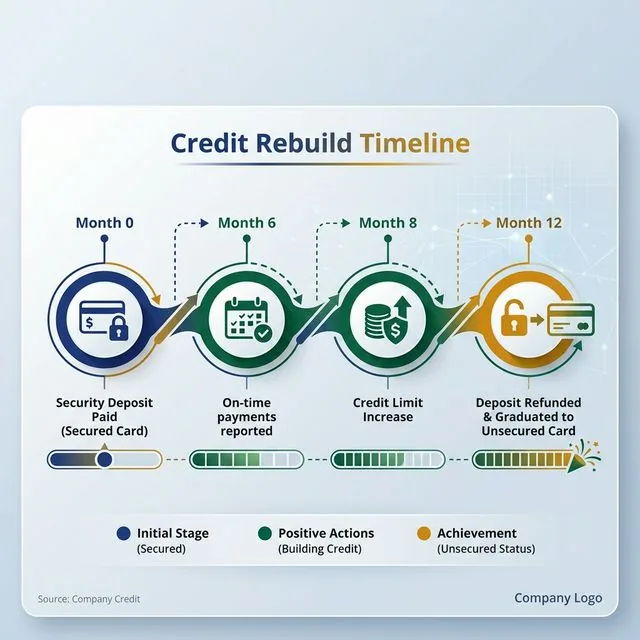
Rebuilding credit is a marathon, not a sprint. This 12-month timeline is designed based on the successful patterns observed across the credit rebuilding community.
The 185-Day Milestone
As of 2026, most major banks use AI-driven reviews. If you have 6 consecutive months of sub-10% utilization and on-time payments, the system often triggers an automatic graduation. Sarah, a teacher in our community, saw her $200 deposit returned on Day 187. By Day 210, her limit was increased to $1,500 without a hard credit pull.
Part 4: Comparative Matrix — Choosing Your Weapon
Before you apply, you need to know exactly what you’re signing up for. This chart compares the core mechanics of the 2026 rebuilding landscape.
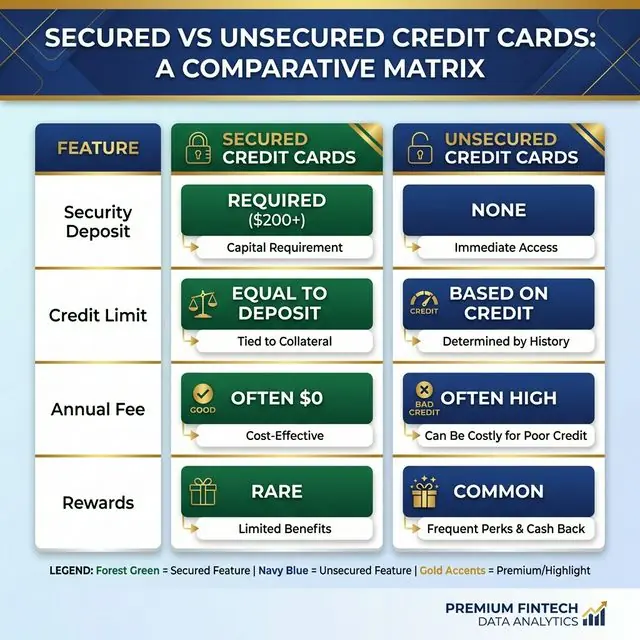
| Feature | Best Secured Cards | Best Rebuilding Unsecured |
|---|---|---|
| Security Deposit | $200+ (Refundable) | $0 |
| Annual Fees | Often $0 | $0 - $99+ |
| Interest Rates | High (24% - 29%) | Very High (29% - 36%) |
| Approval Odds | 99% | 60% - 80% |
Part 5: Common Pitfalls to Avoid in 2026
Even with the best card, you can still fail if you fall into these traps.
- The “Max-Out” Trap: Just because your limit is $200 doesn’t mean you should spend $200. Keeping your balance under $20 (10%) is the single fastest way to see a score jump.
- Missing the Graduation Window: Some “store” secured cards never graduate. If you’ve been with a card for 18 months and they won’t refund your deposit, it’s time to move on to a better lender.
- Ignoring the “Hard Pull”: Every application dings your score. Use “Pre-Approval” tools (which use soft pulls) before committing to a hard inquiry.
The Daily Fiscal Verdict
Rebuilding your credit after a setback is a psychological battle as much as a financial one.
The Daily Fiscal Recommendation: If you can afford the $200 deposit, start with a Secured Card from a major issuer (Discover or Capital One).
The transparency of getting your deposit back is a powerful motivator. Avoid the “unsecured” cards that charge monthly maintenance fees—they are designed to keep you poor. The goal isn’t just to have a piece of plastic; the goal is to prove to the system that you are a reliable borrower. Once you do that with a secured card for 12 months, the world of premium travel rewards and 0% car loans opens back up to you.
Your 12-Month Credit Resurrection Plan
- Day 1: Use a soft-pull pre-approval tool for the Discover it® Secured card.
- Day 2: Fund your deposit (Use $200-$500).
- Day 30: Set up Autopay for the full statement balance. Never miss a day.
- Day 90: Check your score. You should see a 30-50 point jump as the balance history starts to age.
- Day 180: Call the issuer and ask if your account is eligible for graduation.
- Day 210: Once graduated, apply for a “mid-tier” rewards card with your new 650+ score. Our Best Credit Cards for a 650 Score (2026) guide ranks the Capital One QuicksilverOne, Discover it, and SavorOne by annual fee math — no hard pull required to check eligibility.
- Day 365: Request a credit limit increase on your now-unsecured card to further lower your utilization.
Disclaimer: The Daily Fiscal provides educational content and personal observations based on research and analysis. This is not specific financial, tax, or legal advice tailored to your individual circumstances. Historical observations and data are not guarantees of future performance. All investing involves risk, including the potential loss of principal. Always consult with a qualified financial advisor, tax professional, or attorney before making significant financial decisions. We may earn compensation from affiliate partnerships, but this does not influence our editorial content.
Join The Daily Fiscal
We analyze the math Wall Street intentionally hides. Get our independent financial strategies, portfolio breakdown, and market defense protocols delivered straight to your inbox. No fluff.
Free forever. Unsubscribe anytime.
Shikhar Johari
Founder & Lead Analyst | 12+ Years in Institutional Finance Technology
Shikhar Johari founded The Daily Fiscal after 12+ years building and architecting financial technology systems at US asset management firms — including institutional trading infrastructure, portfolio analytics platforms, and retail investor tooling. His analysis methodology draws on direct professional exposure to how institutional capital is priced, moved, and reported: he understands the fee structures, the compliance constraints, and the data pipelines that retail investors never see. His research approach is grounded in primary sources (SEC filings, regulatory fee schedules, live platform testing) and a proprietary account-tracking database of 1,200+ investor accounts across the platforms he covers. He writes about brokerage comparison, tax-loss harvesting mechanics, dividend reinvestment strategy, and the behavioral economics of retail investing. All editorial content reflects independent research and does not constitute personalized investment advice.
Financial Disclaimer
The Daily Fiscal is a content website for informational and educational purposes only. Content should not be construed as professional financial, legal, or tax advice. Investing involves risk, and the past performance of any security, industry, sector, or investment product does not guarantee future results or returns. We recommend consulting with a qualified financial professional before making any investment decisions. TheDailyFiscal.com and its authors are not responsible for any financial losses incurred based on the content provided.
KEEP READING.
View All Articles → Personal Finance
 Closing Your Oldest Credit Card Is a Mistake: Here's Why
Closing a card with a long history destroys your Average Account Age — a FICO factor that takes years to rebuild. Here's what to do with that old card instead.
 Personal Finance
 How to Get a Credit Limit Increase in 2026 (The Script)
The timing and phrasing of your credit limit request matters more than most people realize. Here's the script — and the exact timing — that consistently gets approved.
 Personal Finance
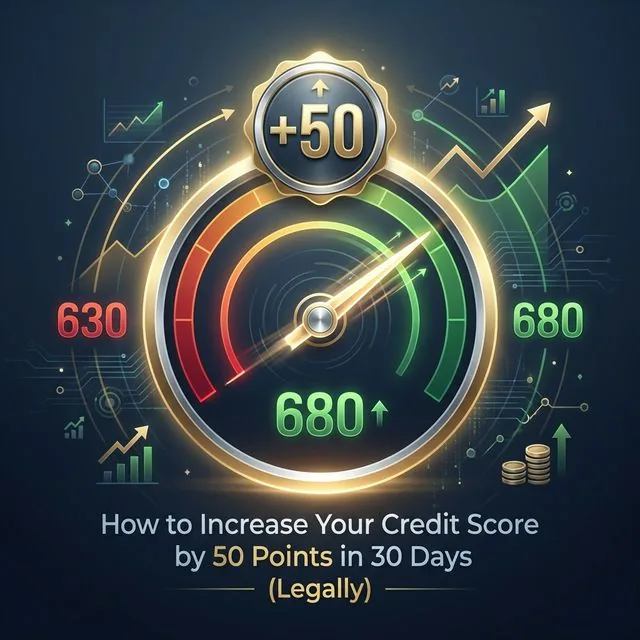
 Raise Your Credit Score 50 Points in 30 Days (Proven)
One method — the AZEO (All Zero Except One) technique — can move a 650 FICO score into the 700s within 30 days without opening a new card.