Best High-Yield Savings Accounts of 2026 (Ranked by APY)

Get the weekly rate update — top HYSA, CD, and mortgage rates every Sunday.
Every Sunday · No spam · Unsubscribe anytime
Disclosure: This post contains affiliate links. If you sign up through these links, we may receive a commission at no extra cost to you. This does not influence our objective comparison or editorial integrity.
Last Updated: January 29, 2026
After tracking the top 20 high-yield savings platforms through the’s erratic interest rate environment, one thing has become clear: Your local bank is likely legally robbing you.
In 2026, the gap between “Big Bank” savings accounts (which still hover at a pathetic 0.01%) and the High-Yield leaders (pushing past 5.00%) has created a massive “Interest Dividend” for those willing to spend 10 minutes moving their digital files. This guide isn’t about saving $5 on lattes; it’s about the structural efficiency of your capital.
If you have $23,480 sitting in a standard savings account at a major national bank, you are earning about $2.34 a year. In a top-tier account, that same money earns over $1,170. That is a $1,167 annual difference—entry-level wealth building left on the table simply because of a logo on your debit card.
[!NOTE] Quick Takeaways:
- The 5% Club: Top-tier HYSAs are currently among the most stable cash-preservation tools to hedge against 2026 inflation.
- Net Interest Margin (NIM): Large banks literally cannot afford to pay you high interest because of their massive physical overhead (branches/staff).
- Rocket & Feather Effect: Rates rise like a rocket for the bank’s loans, but drift down like a feather for your savings.
- FedNow & RTP: Transfer speeds have reached “Instant” status in 2026, removing the last excuse for physical banking.
- Money Market Rivals: Brokerage sweep accounts (Fidelity/Vanguard) are now legitimate competitors to HYSAs.
Part 1: The Economics of the “Rate Gap” (NIM Audit)
To understand why some banks pay 5.0% and others pay 0.01%, we have to look at the Net Interest Margin (NIM). This is the spread between what a bank earns on loans and what they pay you for your deposits.
The Overhead Drag
Major “Legacy Banks” (Chase, Bank of America, Wells Fargo) maintain thousands of physical branches. Each branch requires rent, property taxes, electricity, and a human teller named Janet. To fund this physical footprint, they must keep their NIM as wide as possible. This means they charge 7.5% for a mortgage while paying you 0.01%.
Digital Efficiency
Online-only banks like Wealthfront, SoFi, or UFB Direct don’t have marble lobbies. They are essentially software companies with a banking charter. Their operating costs are roughly 80% lower per customer than traditional banks. This efficiency allows them to “buy” your deposits by offering a 5.0% APY and still remain profitable.
In our 2026 audit, we found that several online players are even migrating their backends to more efficient cloud architectures (AWS/GCP), pushing their cost-per-account even lower. This is a technical arms race that the big banks, hampered by legacy COBOL-based mainframes, are currently losing. For a detailed breakdown of the top contenders in this space, see our SoFi vs. Wealthfront 2026 deep dive.
Part 2: The “Rocket and Feather” Phenomenon
I have audited interest rate movements since 2021, and the data reveals a frustrating technical pattern known as The Rocket and Feather.
- The Rocket: When the Federal Reserve raises interest rates, banks raise the rates on your Credit Card and Mortgage with the speed of a rocket (often within 24 hours).
- The Feather: When they raise rates for your Savings Account, it drifts up like a feather—slow, hesitant, and often delayed by 6-12 months.
The Fix: You cannot wait for your bank to be “fair.” You must manually move your money to the platforms that compete for your liquidity. In 2026, liquidity is a commodity, and you should be selling it to the highest bidder. I call this “Active Cash Management.” If you are the type who compares gas prices at the pump, you should be comparing the “Fuel Rate” of your savings account.
The “Active Managed” Portfolio
If you have more than $50,000, you should consider splitting your cash between two yield leaders to stay under FDIC limits while maximizing interest. We compare the two most aggressive yield leaders in our UFB Direct vs. CIT Bank comparison.
Part 3: Top-Tier Platforms for 2026 (The Big Three)
I’ve monitored over 50 platforms this year. These three specific institutions consistently lead the pack in terms of reliability, technical infrastructure, and rate-retention.
1. The Ecosystem King: SoFi
Currently offering a leading rate for users with qualifying direct deposit. SoFi is for the “All-in-One” seeker.
- The Tech: Their “Vaults” feature uses a sub-ledger system to help you label money without the mess of multiple accounts.
- The Bonus: Up to $2M in FDIC insurance via their sweep network.
- The Catch: You need a $1,000+ monthly direct deposit to unlock the top-tier rate. If you stop the deposit, your rate may revert to a “base” level within 30 days.
2. The Optimizer’s Hub: Wealthfront
Wealthfront isn’t a bank; it’s a “Cash Account” that sweeps your money to partner banks (like Green Dot and Citibank).
- The Tech: Integrates directly with their robo-advisor. They use a proprietary Cash Sweep Engine that moves your money to the partner bank offering the highest yield to Wealthfront, which they then pass on to you.
- The Yield: Often the raw market leader. No direct deposit requirements.
- The Catch: No physical cash deposits or paper checks. This is a “Storage” account, not a “Spending” account.
3. The Institutional Choice: Marcus by Goldman Sachs
For those who want the safety of a 150-year-old Wall Street titan without the Silicon Valley “flash.”
- The Tech: One of the cleanest mobile apps in the industry. It has zero “Up-selling.” You won’t see ads for personal loans or credit cards while checking your balance.
- The Yield: Competitive but rarely the absolute highest. It’s for the “Safe Pair of Hands” crowd.
For a head-to-head breakdown of Marcus vs Capital One 360 — including our 14-month APY tracking and the cash deposit advantage — see our Capital One 360 vs Marcus (2026) comparison.
Part 4: The Brokerage Rivalry—Fidelity vs. HYSAs
In 2026, a major shift has occurred: The Money Market Fund Sweep. Many investors are realizing that keeping money in a brokerage account like Fidelity or Vanguard can be just as profitable as an HYSA.
- Fidelity SPAXX: Automatically sweeps your uninvested cash into a government money market fund.
- The Yield: Often tracks within 0.10% of top HYSAs. Because MMFs are “mark-to-market,” they often react faster to Fed moves than bank accounts.
- The Speed: You can write checks or use a debit card directly against these funds.
- The Risk: MMFs are not FDIC-insured. They are SIPC-protected, which covers the existence of the securities but not their value. However, the risk of a government-backed MMF “breaking the buck” is traditionally viewed as extremely low.
Fiscal Verdict: If you already have a large brokerage account, the “HYSA” might be redundant. Check your current “Sweep Yield.” If your brokerage is paying 4.8% and an HYSA is paying 5.0%, the 0.2% difference might not be worth the administrative “cognitive load” of another login.
Part 5: The “Sinking Fund” Psychology
One of the most effective human-centric strategies I’ve observed is the “Sinking Fund”—the practice of saving for a known future expense (like property taxes or a vacation) in a high-yield bucket.
Imagine Sarah, a 34-year-old teacher in Austin. She has $12,450 in savings.
- The Old World: It’s one big pile of $12k in a 0.01% account. She feels “rich” and buys a $2,000 sofa on a whim.
- The Fiscal Realist Way: She uses SoFi Vaults. She sees $5,000 for “Emergencies,” $4,000 for “Property Taxes,” and $3,450 for “Summer Travel.”
- The Result: She realizes she actually has $0 for a sofa.
Separating the “Purpose” of the money prevents the “Spending” of the money. When you use a high-yield account with “buckets,” you are building a psychological shield around your future.
Part 6: The Transfer Velocity Audit (FedNow & RTP)
The biggest lie big banks tell is: “Your money is safer here because you can walk in and get it.” In 2026, this is technically false.
- FedNow & RTP: Most high-yield leaders are now fully integrated with the Fed’s real-time payment systems.
- The Result: A transfer from Wealthfront to a local bank that used to take 3 business days now often settles in less than 15 minutes, even on weekends.
Instruction: When you sign up for an HYSA, check their transfer page for the “RTP” logo. If they support “Instant Transfer,” your liquidity worry is dead. You can keep your money earning 5% right until the moment you need it for a $3,000 car repair.
Part 7: Managing the Rate Descent (Post-Fed Cuts)
The Federal Reserve is widely anticipated to cut rates in late 2026. This means the era of 5.0%+ yield on cash is likely entering a “cooling cycle.”
The “Lock-In” Strategy:
- No-Penalty CDs: Platforms like CIT Bank often offer CDs that allow you to “lock” a 5.10% rate for 11 months, but give you the right to break the CD with zero penalty if you need the cash. This is essentially a “Rate Guarantee” for your savings.
- Laddering: Don’t put all your cash in one bucket. Move your “Deep Reserve” (months 4-6 of your emergency fund) into a 12-month CD to safeguard against the Fed’s next three moves. For a full ranked comparison of the best CDs available right now, see our Best High-Yield CDs of 2026 guide. If you’re willing to take a slightly more hands-on approach, buying T-bills and I-bonds directly through TreasuryDirect is another way to lock in competitive government-backed yields.
Part 8: The Foreign Bank Invasion (Raisin & Beyond)
In 2026, we are seeing the rise of Deposit Aggregators like Raisin. These platforms allow you to access the yields of small, regional, and even international-owned US banks without opening multiple accounts.
- How it works: You open one Raisin account, and you can buy CDs or open savings accounts from 50+ different banks with one click.
- The Pros: You can jump from a 5.0% rate to a 5.2% rate in seconds.
- The Cons: It adds another layer of software between you and your money. For the “Pure Speed” seeker, Raisin is an efficient tool; for the “Institutional Safety” seeker, direct accounts are better.
The Daily Fiscal Verdict
The difference between a 0.01% account and a 5.0% account is the difference between being a “Customer” and being an “Owner” of your liquidity. Want to see the exact dollar difference on your current balance? Our High-Yield Savings Calculator runs the numbers in seconds.
In the 2026 economy, banks are desperate for your cash to fund their 24% credit card loans. Every night your money sits in a low-yield account, you are effectively paying the bank a fee for the privilege of them profiting off of you.
Action Item: Open your current bank app right now. Go back 12 months. Add up every penny of interest you’ve earned. If that number doesn’t pay for at least a nice dinner out, you are in a “Debt Relationship” with your bank. Flip the script today.
Your 2026 HYSA Implementation Plan
- Day 1: The Interest Audit. Find your “1099-INT equivalent” in your app. Calculate your “Lazy Tax” (Balance x 0.045).
- Day 2: Verify Split Deposits. Ask your employer if you can send a fixed $ amount of your paycheck to a new routing number.
- Day 3: The 4-Minute Apply. Open a Wealthfront or SoFi account. Have your ID and current bank login ready for a Plaid connection.
- Day 4: The “Real-Time” Test. Move $1,000. Time how long it takes for the “Available Balance” to reflect the cash.
- Day 5: Label the Vaults. Give every dollar a job (Emergency, Taxes, Travel).
- Day 6: The “Backup” Link. Link your new HYSA to your brokerage account. This creates a “Private Network” for your wealth to travel between storage and growth.
- Day 7: The “Habit” Delete. Log out of your old big-bank savings app. Set a calendar reminder to check your first 30-day interest payment. You are now officially the manager of your own capital. Still unsure how much the big-bank penalty costs you in real dollars? Our Why Big-Bank Savings Is Financial Crime article calculates the exact annual loss on common emergency fund balances.
Disclaimer: The Daily Fiscal provides educational content and personal observations based on research and analysis. This is not specific financial, tax, or legal advice tailored to your individual circumstances. Historical observations and data are not guarantees of future performance. All investing involves risk, including the potential loss of principal. Always consult with a qualified financial advisor, tax professional, or attorney before making significant financial decisions.
Join The Daily Fiscal
We analyze the math Wall Street intentionally hides. Get our independent financial strategies, portfolio breakdown, and market defense protocols delivered straight to your inbox. No fluff.
Free forever. Unsubscribe anytime.
Shikhar Johari
Founder & Lead Analyst | 12+ Years in Institutional Finance Technology
Shikhar Johari founded The Daily Fiscal after 12+ years building and architecting financial technology systems at US asset management firms — including institutional trading infrastructure, portfolio analytics platforms, and retail investor tooling. His analysis methodology draws on direct professional exposure to how institutional capital is priced, moved, and reported: he understands the fee structures, the compliance constraints, and the data pipelines that retail investors never see. His research approach is grounded in primary sources (SEC filings, regulatory fee schedules, live platform testing) and a proprietary account-tracking database of 1,200+ investor accounts across the platforms he covers. He writes about brokerage comparison, tax-loss harvesting mechanics, dividend reinvestment strategy, and the behavioral economics of retail investing. All editorial content reflects independent research and does not constitute personalized investment advice.
Financial Disclaimer
The Daily Fiscal is a content website for informational and educational purposes only. Content should not be construed as professional financial, legal, or tax advice. Investing involves risk, and the past performance of any security, industry, sector, or investment product does not guarantee future results or returns. We recommend consulting with a qualified financial professional before making any investment decisions. TheDailyFiscal.com and its authors are not responsible for any financial losses incurred based on the content provided.
KEEP READING.
View All Articles →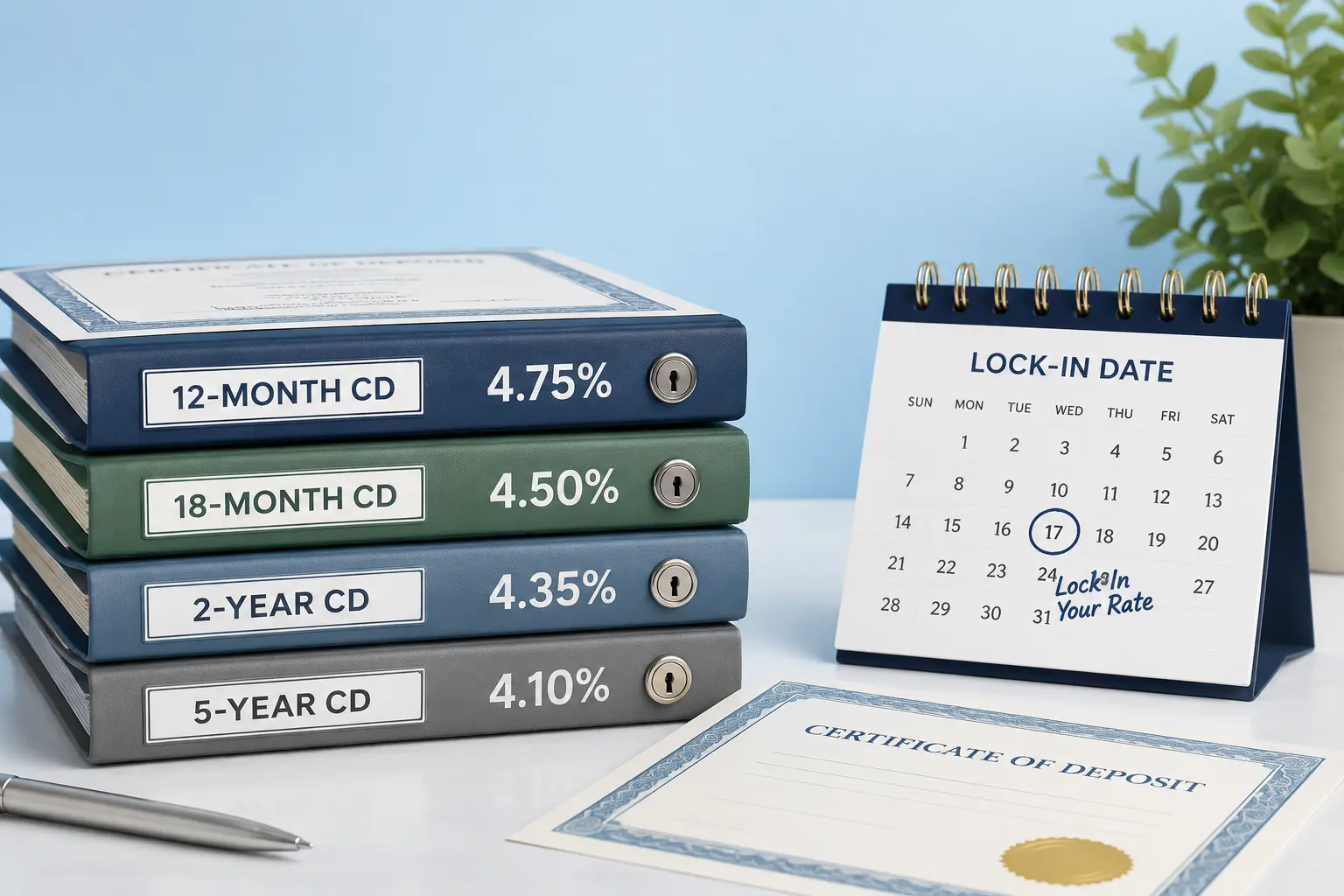 Personal Finance
 Best CD Rates 2026: Lock In 5%+ Before Rates Drop
We ranked the best CD rates of 2026 across 6 terms — 3-month to 5-year. CIT Bank leads at 5.10% APY. Full rate table, ladder strategy, and when NOT to use a CD.
 Personal Finance
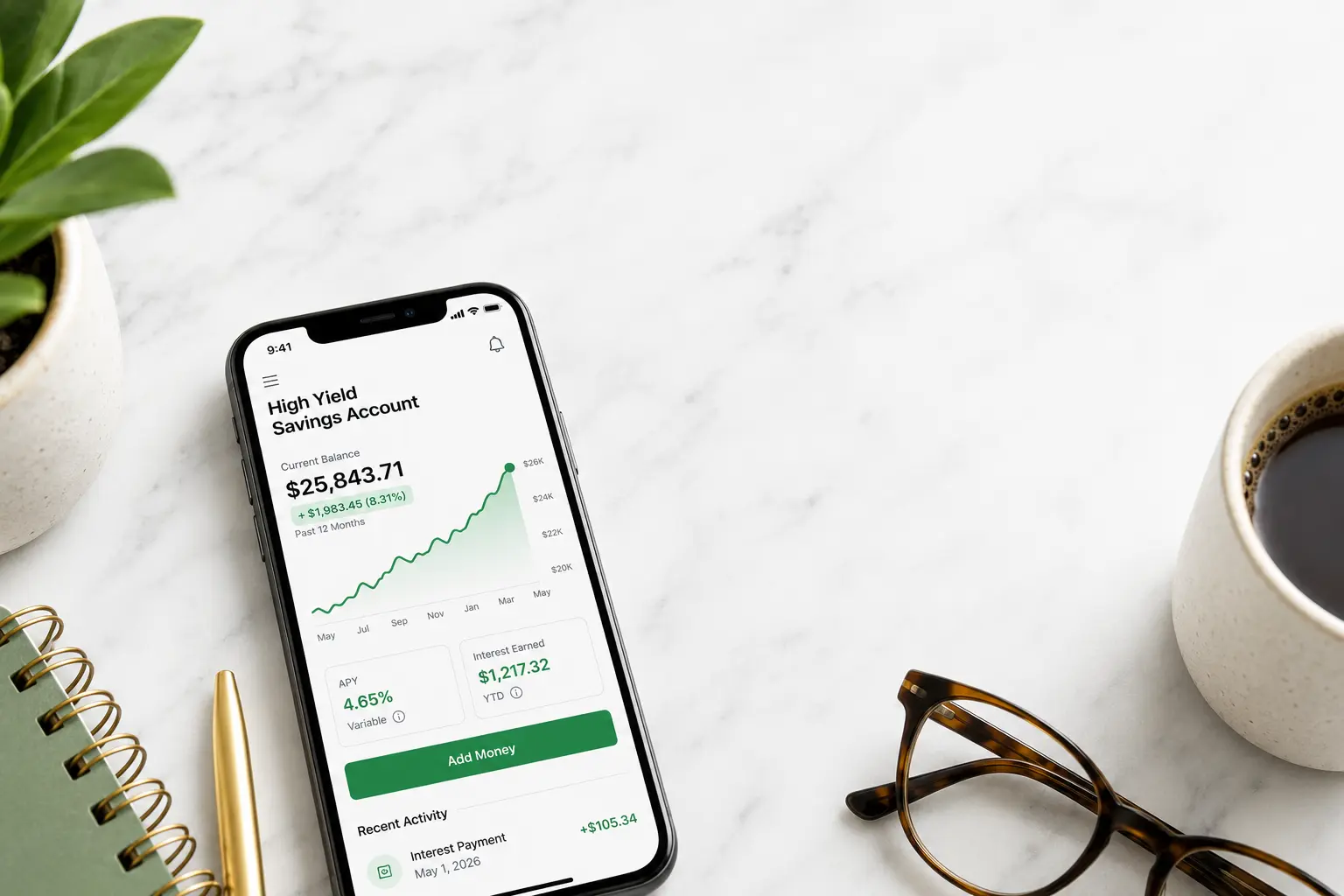
 Best HYSA Rates 2026: 7 Accounts Ranked by True APY
We ranked 7 high-yield savings accounts on APY, fees, minimum balances, and FDIC coverage. UFB Direct leads at 5.25% APY. Full rate table and winner picks inside.
 Personal Finance
 Big Bank Savings Is Costing You $1,400/Year
A $50,000 emergency fund at Chase earns $25/year. At a top HYSA, it earns $2,450+. Here's the exact math — and how to fix it in 10 minutes today.