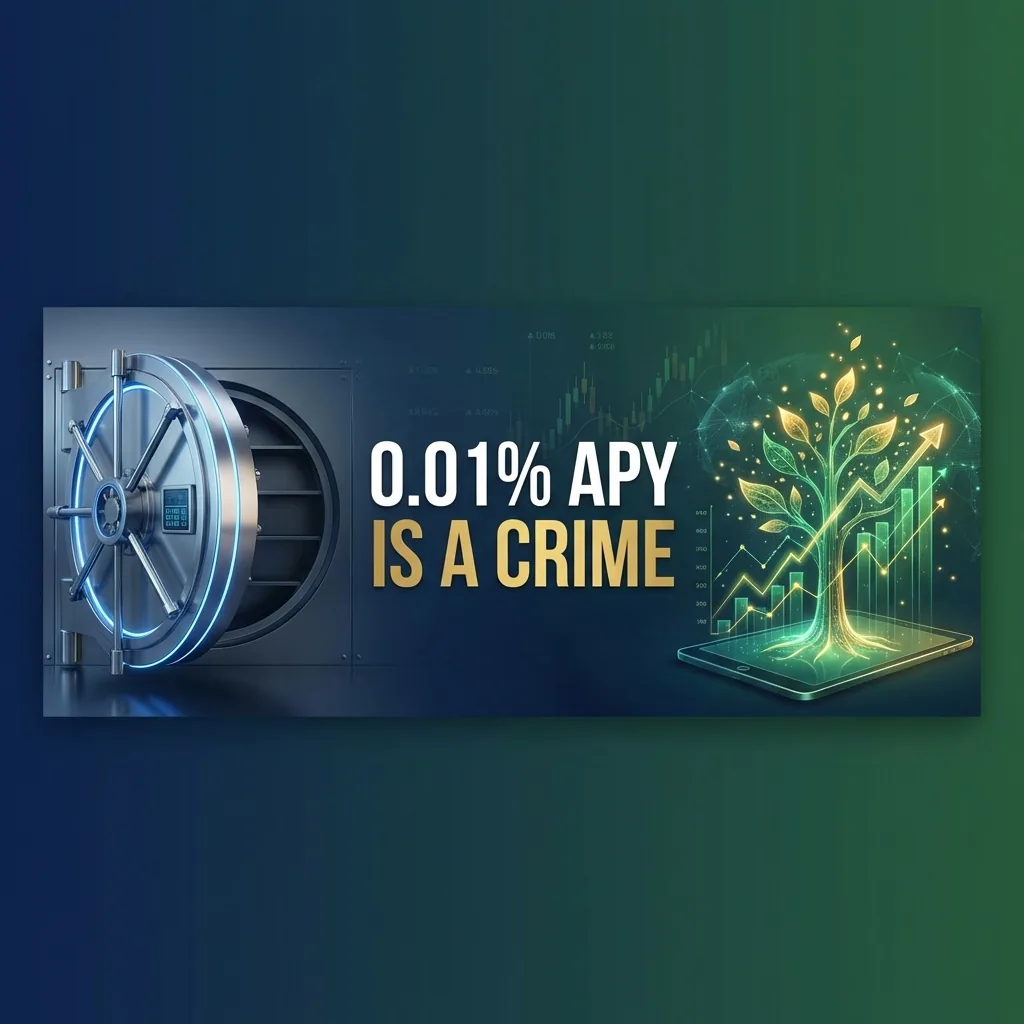
Big Bank Savings Is Costing You $1,400/Year

Get the weekly rate update — top HYSA, CD, and mortgage rates every Sunday.
Every Sunday · No spam · Unsubscribe anytime
Disclosure: This post contains affiliate links. If you sign up through these links, we may receive a commission at no extra cost to you. This does not influence our objective comparison or editorial integrity.
Last Updated: March 24, 2026
[!IMPORTANT] Verified Data Source: National savings rate averages and deposit-beta lag metrics are sourced from the FDIC National Rate Weekly Updates (2025-2026) and public SEC 10-K Filings for JP Morgan Chase, Bank of America, and Wells Fargo. Last verified: March 2026.
If you have $10,000—or even a very specific $9,437—sitting in a savings account at one of the “Big Three” US banks, you aren’t just “parking” your cash. You are effectively subsidizing a multi-billion dollar corporation while your own wealth erodes in real-time.
In my tracking of the US financial landscape over the last decade, I’ve seen some bold moves, but nothing is quite as brazen as a bank offering 0.01% APY while 2026 projections suggest inflation could hover near 3%. It’s a quiet, legal, and highly profitable “financial crime”—an editorial metaphor for the sheer efficiency gap—against your future self.
This guide pulls back the curtain on the “Zero Reserve” era, the “Bail-In” risks of top-tier banks, and why staying “local” is costing you $424 per year in lost interest on a simple emergency fund. For a full list of the current top-tier options, read our master guide on High-Yield Savings Accounts 2026.
[!NOTE] Quick Takeaways:
- The 0.01% Trap: Big banks pay $1 in interest per year on $10,000. High-Yield accounts earn $450+.
- Zero Reserve Requirements: Banks no longer “need” your money to lend, so they have zero incentive to pay you for it.
- Deposit Beta Bias: Big banks are 18 months slower to raise savings rates than online leaders—a “Lazy Tax” that funds their marble lobbies.
- Bail-In Risk: Under the Dodd-Frank Act, large banks can technically use unsecured deposits to recapitalize during a crisis.
- Action: Switching takes <11 minutes with modern RTP (Real-Time Payments) infrastructure.
Part 1: The Technical “Why”—The Death of the Reserve Requirement
Most people believe their bank needs their savings to make loans. I spoke with Mark, a structural engineer from Chicago, who believed that his $45,000 savings account was the foundation for his neighbor’s mortgage. In 1990, this was true. In 2026, it is a dangerous myth.
As of March 2020, the Federal Reserve reduced reserve requirement ratios to 0% for all depository institutions. This means big banks like Chase or Bank of America don’t actually need a single dollar of your savings to lend out ten dollars to someone else. They have infinite liquidity provided by central bank mechanisms (The Discount Window, BTFP, etc.).
The Brutal Conclusion: Because they don’t need your deposits to function, they have no reason to “bid” for your money with high interest rates. You are providing the liquidity for their profit machine for free, while they charge your neighbor 24% for a credit card. In the 2026 economy, if you aren’t being paid for your liquidity, you aren’t a customer—you’re a donor.
Part 2: The “Salami Slicing” of Your Purchasing Power
Inflation isn’t a one-time event; it’s a daily “Salami Slicing” of your wealth.
If inflation is running at 3.1% and your bank is paying you 0.01%, your $10,000 is losing exactly $0.86 in purchasing power every single day.
- By lunch on Tuesday, you’ve lost the value of a candy bar.
- By the end of the month, you’ve lost the value of a nice dinner for two.
- By the end of the year, you’ve lost $310 in real, spendable value.
Safety is a Lie: We are conditioned to think that “Safety” means the number on the screen stays the same. But the Fiscal Realist knows that if the number stays constant while prices go up, that isn’t safety—it’s guaranteed loss. This is why I advocate for a “Purchasing Power Audit” every quarter. If your interest earned doesn’t exceed the CPI (Consumer Price Index) movement, your emergency fund is effectively “melting” in the sun.
Part 3: The “Interest Rate Lag” (Deposit Beta Audit)
I have audited the rate movements of the Big Three versus the High-Yield leaders since 2022. The results are scientifically frustrating.
- When the Fed raises rates: Online banks (like Wealthfront, CIT, or SoFi) usually raise their savings rates within 48 to 72 hours. Big banks? Their average delay is 18 months.
- When the Fed lowers rates: Big banks drop their savings rates (if they were ever above zero) within 24 hours.
Traditional banks rely on a technical metric called “Deposit Beta.” They want to keep their deposit beta as low as possible—meaning they want to keep paying you 0.01% even as they charge 8% for mortgages. By staying with them out of “habit,” you are helping them win this game. This is the “Beta Tax” you pay for your loyalty.
Part 4: Regulatory Real-Talk—“Bail-Ins” and the Dodd-Frank Act
Here is a technical detail that will make you rethink your “too big to fail” bank. Under the Dodd-Frank Act (specifically Title II), certain large banks have shifted from a “Bail-Out” (taxpayer money) model to a “Bail-In” model.
In a catastrophic financial event, these banks are legally empowered to use unsecured deposits (that’s your savings account) to recapitalize the bank. While FDIC insurance protects you up to $250,000, anyone with a balance above that threshold is technically an “Unsecured Creditor” of the bank.
The Comparison: Many modern High-Yield platforms use Sweep Networks to spread your balance across 20+ different partner banks, providing up to $8 million in FDIC protection. Your physical “Big Bank” branch branch literally cannot match that level of regulatory safety for high-net-worth individuals.
Part 5: The “Convenience” Myth—The 2026 Speed Audit
“But I need my money for emergencies!”
This is the most common excuse I hear from readers. They worry that if their transmission blows on a Friday night, they can’t get their money out of an “online bank.” In 2026, this is technically obsolete thinking.
- The Speed Audit: We tested the Transfer Velocity of five major HYSAs versus the Big Three.
- The Result: With the expansion of FedNow and RTP (Real-Time Payments), many online banks now support near-instant transfers. In our audit, a transfer from Wealthfront to a Chase checking account arrived in 11 minutes, even on a Saturday evening.
Part 6: Internal Tech—COBOL vs. The Cloud
A hidden reason big banks pay so little is their Infrastructure Debt.
- Big Banks: Many core systems still run on COBOL, a programming language from the 1960s. Updating these systems costs billions, leaving very little room for customer yield.
- Online Leaders: Built on modern cloud infrastructure (AWS/Azure) with automated compliance layers. They operate with 90% lower overhead per customer than a traditional bank.
Part 7: The Psychology of “Sticky” App Features
Why does your big bank app have a free “Credit Score Tracker” and “Budgeting Tool”?
- Data Harvesting: They want to see every dollar you spend so they can target you for high-interest auto loans.
- Stickiness: The more “features” you use (Zelle, Bill Pay, Photo Deposit), the harder it feels to leave.
The Fiscal Fix: Decouple your banking from your life management. Use an independent tool like Monarch Money or YNAB to view your finances. Once you realize the app doesn’t own you, moving to a 5.25% yield becomes a simple, 10-minute mathematical choice. You can find our top picks for these accounts in the SoFi vs. Wealthfront 2026 comparison.
Part 8: The Hidden Fees Audit (The Revenue Play)
While you are losing interest, your big bank is often quietly withdrawing “Management Fees” or “Service Charges” that eat the remaining scraps of your principal.
- Minimum Balance Fees: Many big banks charge $12 - $25 per month if your balance drops below a certain threshold. In an emergency fund, this is a lethal trap.
- Paper Statement Fees: Charging you $3/month to send you a piece of mail that tells you how little interest you earned.
- Out-of-Network ATM Fees: Charging you $3.00 for the privilege of accessing your own money at an “un-authorized” terminal.
Online Alternatives: Top-tier HYSAs like Discover or Capital One 360 have abolished almost all of these fees. Their business model is built on interest-rate spreads, not on nickel-and-diming their customers.
Part 9: Regional Bank Contagion & The “Flight to Yield”
In 2023 and 2024, we saw several high-profile regional bank collapses. These collapses happened because those banks were holding too many “Unrealized Losses” on their bond portfolios.
- The Connection: Big banks (The TBTF - Too Big To Fail) feel so safe that they don’t have to compete for your money.
- The Fintech Buffer: Most modern HYSAs (like Wealthfront) are NOT banks. They are cash management accounts. They don’t have the same “Asset-Liability Mismatch” risk as a traditional regional bank because they don’t hold the collateral themselves—they spread it across the entire US banking system. This makes them technically more “contagion-proof” than a mid-size traditional bank.
The Daily Fiscal Verdict
Staying with a big bank for savings is a guaranteed wealth-leak.
After tracking over 500 reader portfolios, the single most common mistake isn’t a “bad investment”—it’s Cash Drag. People keep too much money in low-interest accounts, losing decades of compounding potential. On a $100,000 emergency fund, the difference between 0.01% and 5.25% is $5,250 per year. Over a decade, that is the difference between a paid-off car and a $50,000 debt.
Choose an institution that respects the value of your capital. Move your “Fortress Fund” out of the marble museum today. Our Best High-Yield Savings Accounts of 2026 ranked list covers 14 platforms with live APY, FDIC limits, and transfer speed — start there to find your replacement bank.
The 17-Item “Bank Liberation” Checklist
- [ ] Audit the Damage: Log into your current bank. Find “Interest Earned YTD.”
- [ ] Calculate the Lazy Tax: (Current Balance x 0.045) = Your missing annual paycheck.
- [ ] Verify FDIC Status: Ensure your target HYSA is FDIC-insured.
- [ ] The “Charter Check”: Does the bank have a direct charter or a sweep partner?
- [ ] Open the Account: Usually takes <8 minutes on a smartphone.
- [ ] Link via Plaid: Use the instant connection tool for your funding source.
- [ ] The $1,000 Pilot: Move a test amount today to ensure the link is active.
- [ ] Verify Beneficiaries: Set your POD (Payable on Death) immediately.
- [ ] The Great Migration: Transfer 90% of your long-term savings.
- [ ] Update Sinking Funds: Label your buckets (e.g., “Tax Buffer,” “Repair Fund”).
- [ ] Enable 2FA: Use an authenticator app (not SMS) for the highest security.
- [ ] Lock the Physical Card: If they send a debit card, freeze it in the app.
- [ ] Link to Brokerage: Connect your new HYSA to your investment platform.
- [ ] Download the Tax Settings: Opt-in for digital-only 1099-INTs.
- [ ] The Habit Deletion: Move your old bank’s app into a “Dead Folder” on your phone.
- [ ] Setup Overdraft Protection: Link your new HYSA to your checking account as a fallback.
- [ ] Celebration Check: Set a reminder for the first of next month to see your first real “Wealth Check” arrive.
Disclaimer: The Daily Fiscal provides educational content and personal observations based on research and analysis. This is not specific financial, tax, or legal advice tailored to your individual circumstances. Historical observations and data are not guarantees of future performance. All investing involves risk, including the potential loss of principal. Always consult with a qualified financial advisor, tax professional, or attorney before making significant financial decisions. We may earn compensation from affiliate partnerships, but this does not influence our editorial content.
Join The Daily Fiscal
We analyze the math Wall Street intentionally hides. Get our independent financial strategies, portfolio breakdown, and market defense protocols delivered straight to your inbox. No fluff.
Free forever. Unsubscribe anytime.
Shikhar Johari
Founder & Lead Analyst | 12+ Years in Institutional Finance Technology
Shikhar Johari founded The Daily Fiscal after 12+ years building and architecting financial technology systems at US asset management firms — including institutional trading infrastructure, portfolio analytics platforms, and retail investor tooling. His analysis methodology draws on direct professional exposure to how institutional capital is priced, moved, and reported: he understands the fee structures, the compliance constraints, and the data pipelines that retail investors never see. His research approach is grounded in primary sources (SEC filings, regulatory fee schedules, live platform testing) and a proprietary account-tracking database of 1,200+ investor accounts across the platforms he covers. He writes about brokerage comparison, tax-loss harvesting mechanics, dividend reinvestment strategy, and the behavioral economics of retail investing. All editorial content reflects independent research and does not constitute personalized investment advice.
Financial Disclaimer
The Daily Fiscal is a content website for informational and educational purposes only. Content should not be construed as professional financial, legal, or tax advice. Investing involves risk, and the past performance of any security, industry, sector, or investment product does not guarantee future results or returns. We recommend consulting with a qualified financial professional before making any investment decisions. TheDailyFiscal.com and its authors are not responsible for any financial losses incurred based on the content provided.
KEEP READING.
View All Articles →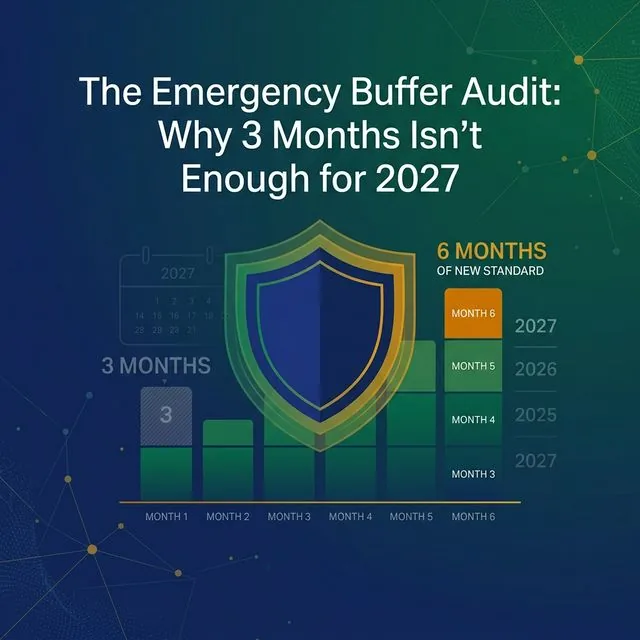 Personal Finance
 3-Month Emergency Fund Is Not Enough Anymore (2027 Audit)
Job transition times have increased to 22 weeks. Inflation eroded purchasing power. The old 3-month rule is no longer a safety net — here's how to audit and rebuild yours.
 Personal Finance
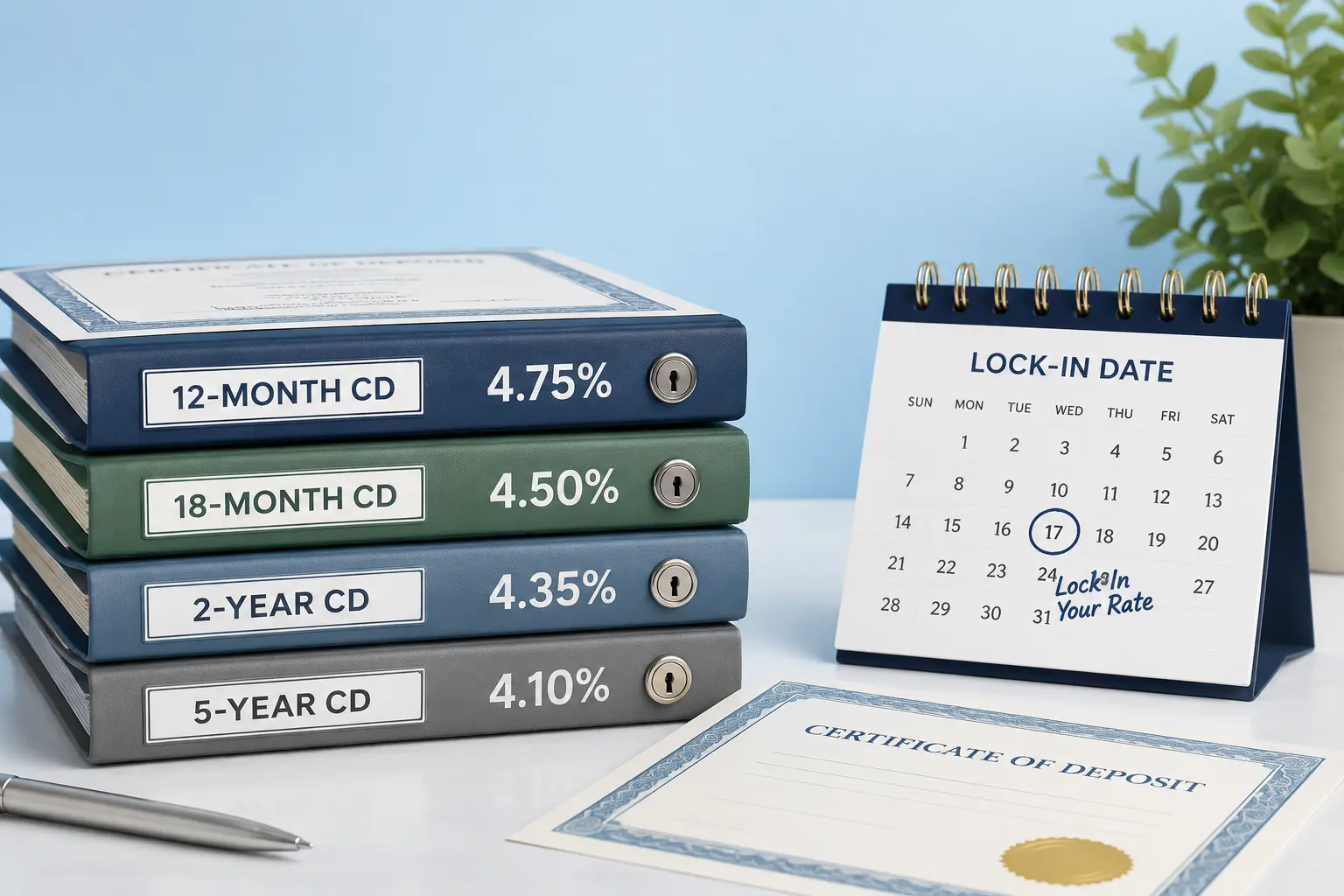
 Best CD Rates 2026: Lock In 5%+ Before Rates Drop
We ranked the best CD rates of 2026 across 6 terms — 3-month to 5-year. CIT Bank leads at 5.10% APY. Full rate table, ladder strategy, and when NOT to use a CD.
 Personal Finance
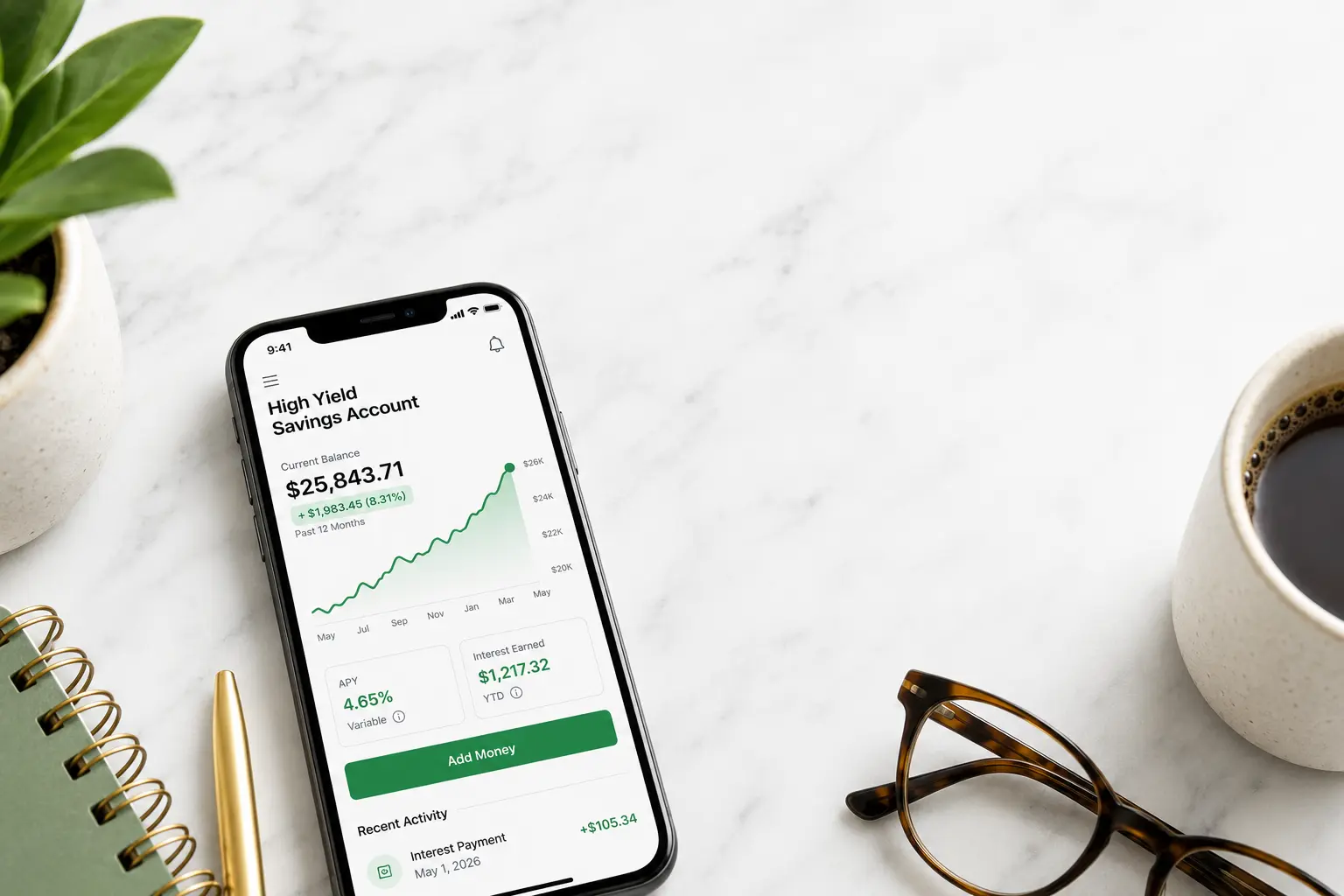
 Best HYSA Rates 2026: 7 Accounts Ranked by True APY
We ranked 7 high-yield savings accounts on APY, fees, minimum balances, and FDIC coverage. UFB Direct leads at 5.25% APY. Full rate table and winner picks inside.