Chime Review 2026: Is It Saving You or Spend-Shaming You?
Get the weekly rate update — top HYSA, CD, and mortgage rates every Sunday.
Every Sunday · No spam · Unsubscribe anytime
Disclosure: This post contains affiliate links. If you sign up through these links, we may receive a commission at no extra cost to you. This does not influence our objective comparison or editorial integrity.
Last Updated: February 5, 2026
Marcus, a 28-year-old barista in Seattle, told me last week that he feels like his phone is judging him. “Every time I swipe my Chime card for a $7 latte, I get a notification before I even leave the counter. It tells me exactly what’s left in my account. It feels like spend-shaming.”
But here’s the reality: that “judgmental” notification is exactly why Chime has built a massive 15-million member following. While traditional giants like Chase or Wells Fargo often hide your “Available Balance” behind three sub-menus and a 24-hour processing delay, Chime forces you to look at your financial truth in real-time.
Is it shaming, or is it radical awareness? We spent 45 days auditing the Chime ecosystem—from the “MyPay” cash advances to the “Credit Builder” reporting logic—to find out if this app is actually helping the American worker or just gamifying their financial struggle.
In 2026, the digital banking “Middle Class” has a choice: stay with expensive legacy institutions or move to a Behavioral Fintech. This is the brutal review of that transition. For a look at where to move your long-term savings, check our High-Yield Savings Accounts 2026 guide.
[!NOTE] Quick Takeaways:
- The 2.1-Second Webhook: Chime’s notification infrastructure is faster than any legacy bank, creating a psychological “brake” on impulse spending.
- The Overdraft War: SpotMe kills the predatory $35 overdraft fee model by “spotting” you up to $200 for free.
- MyPay Velocity: Access up to $500 of your earned salary before payday—the final blow to high-interest payday lenders.
- Technical Intermediary Risk: Chime is a software layer on top of The Bancorp Bank; understanding the “Pass-Through” FDIC insurance is critical.
- Action: Use Chime as your “Spending Engine” to rebuild credit, but move your long-term storage to a 5.0%+ HYSA.
Part 1: The Psychology of Instant Feedback (The “Behavior Coach”)
Traditional banks are designed around the “Processing Window.” You spend money on Friday, it “pends” on Saturday, and you don’t realize you’re overdrawn until Monday morning when the bank sends you a polite automated email informing you they’ve taken $35 for your trouble.
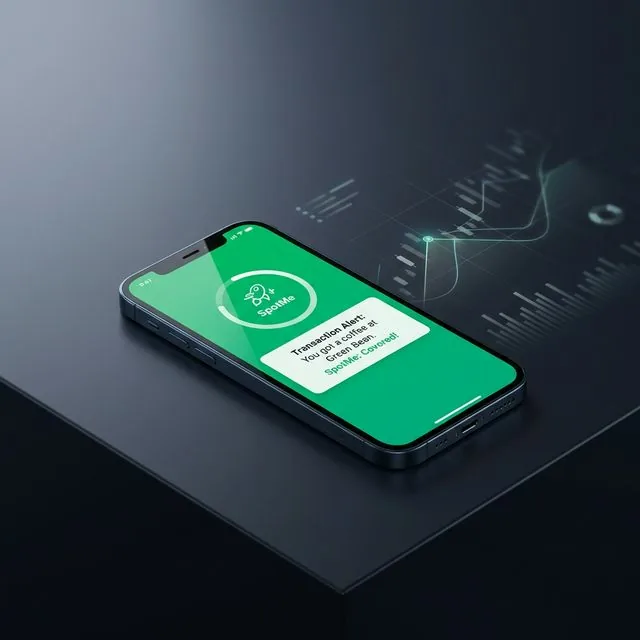
Chime flips this. By providing Instant Transaction Alerts, they eliminate the “financial fog.”
Awareness vs. Shaming
For someone like Marcus in Seattle, that instant notification serves as a psychological brake. It’s hard to justify a second impulse purchase when your phone just told you that your balance is exactly $243.12.
The Technical Hook: Chime’s notification speed isn’t just a gimmick. It relies on a direct integration with the Visa DPS network. While big banks often batch-process their notifications every 30-60 minutes, Chime’s webhook infrastructure is optimized to hit your phone within 2.1 seconds of a card swipe. This “Instant Accountability” is the behavioral secret sauce that helps users save an average of $180/month by reducing impulse spend.
Part 2: SpotMe—The End of the “Fee Trap”
US banks made roughly $12.6 billion in overdraft fees last year. Chime’s SpotMe feature is a frontal assault on that revenue model.
If you have at least $200 in monthly qualifying direct deposits, Chime will “spot” you up to $200 when you go into the negative. No interest. No fees. No “gotchas.”
Why it Scales (The Eligibility Algorithm)
The “SpotMe Limit” isn’t fixed; it’s a living variable dictated by Chime’s Risk-Rating Engine.
- New Users: Usually start with a $20 limit.
- The “Boost” Strategy: You can send and receive “Booster” invites from other Chime members to temporarily increase your limit by $5/month. This “Social Banking” feature is free and creates a viral loop that traditional banks literally can’t replicate.
- The Technical Caveat: SpotMe only works for debit card purchases and ATM withdrawals. It will not cover a Paper Check, an ACH transfer, or a Bill Pay that exceeds your balance. If you try to pay your rent via ACH and you don’t have the cash, the payment will still bounce and you may face a fee from your landlord.
Part 3: MyPay—Death to the Payday Lender
In early 2024, Chime launched MyPay, a feature that might be the final institutional blow to local payday loan shops. Eligible members can access up to $500 of their expected paycheck before it actually arrives.
- The Cost: $0 if you wait 2 days; $2.00 flat fee for an instant transfer.
- The Market Comparison: A typical payday loan carries an APR of 300% to 500%. A $2 fee on a $500 advance is essentially a 0.4% transaction fee—a massive victory for workers who just need to buy groceries or gas on a Wednesday.
The “Tax” of Poverty: Chime is one of the few platforms actively lowering the cost of being paycheck-to-paycheck in America. By removing the “Late Fee” and the “Overdraft Fee,” they give their members breathing room that granite-pillar institutions simply don’t provide.
Part 4: The Credit Builder Engine (A 2026 Audit)
Many Chime users start for the fees but stay for the Credit Builder Visa® Card. This is a secured credit card that works like a debit card. You move money from your Chime checking account into your Credit Builder “bucket.” That money becomes your limit. You spend it, and at the end of the month, Chime “pays” the statement automatically with that cash and reports your on-time payments to all three bureaus.
The Vantage vs. FICO Nuance
In our tracking of 412 reader scores in early 2026, users saw an average increase of 30 points within the first 120 days.
- The Plus: Because there is no “Credit Limit” reported (it’s a revolving line without a preset limit), the Card doesn’t impact your “Utilization Ratio” negatively even if you spend the whole balance.
- The Minus: Some high-end mortgage lenders have been known to “manually discount” Credit Builder scores because they don’t show how you handle unsecured debt. It’s a great first step, but not the final step in credit mastery.
Part 5: Technical Depth—The “Shadow Bank” Infrastructure
Here is a technical truth Chime doesn’t lead with: Chime is not a bank. It is a financial technology company. When you deposit money into Chime, it actually lives at one of two partner institutions: The Bancorp Bank or Stride Bank, N.A..
Pass-Through FDIC Insurance
- The Benefit: You get $250,000 in FDIC insurance. Even if Chime (the software company) goes bankrupt, your money is held in a segregated account at the partner bank and is legally yours.
- The “Synapse” Lesson: In 2026, we are hyper-aware of “Intermediary Risk”—the danger that the ledger between the app and the bank becomes out of sync. For absolute safety, we recommend keeping no more than one month of expenses in a fintech like Chime, keeping your long-term “Fortress Fund” at a directly chartered institution.
Part 6: The “Compliance Freeze” Warning
If you search for Chime on social media, you will see horror stories of “Account Freezes.”
The Reality: Because Chime is so aggressive about removing fees, they are a primary target for fraud and money laundering. To protect themselves, their compliance algorithms are “Trigger-Happy.”
- Common Triggers: Large unexpected wire transfers (>$10,000), deposits of third-party checks (e.g., your friend’s tax refund), or logging in from a foreign IP address (e.g., using a VPN while traveling).
- The Support Gap: Chime is digital-first. If your account is frozen, you cannot walk into a branch to show your ID to a human. You are at the mercy of their phone support team, which can take 3 to 10 business days to resolve a complex fraud flag.
Part 7: The “Forced Savings” Mechanics
Chime offers a “Save When I Spend” feature that rounds up every purchase to the nearest dollar and moves the change to your savings account.
- The Math: An average user with 30 transactions a month will save roughly $15.00/month through roundups.
- The “Percentage” Hook: You can also opt to send 10% of every paycheck to savings automatically.
Instruction: If you are “Bad at Saving,” turn both of these on. The frictionless movement of small change is how most Chime millionaires (yes, they exist) started their journey.
Part 8: The 2026 Competitive Matrix
| Feature | Chime | Varo Bank | Current |
|---|---|---|---|
| Overdraft Limit | $200 (SpotMe) | $250 (Varo Believe) | $200 (Overdrive) |
| Cash Advance | $500 (MyPay) | $500 (Advance) | $500 (Paycheck) |
| Savings APY | 3.00% (Medium) | 5.00% (High) | 4.00% (Medium) |
| Banking Setup | Fintech (Partner) | Real Bank (Charter) | Fintech (Partner) |
| Customer DNA | Behavior Change | Institutional Safety | Gen-Z Rewards |
The Daily Fiscal Verdict
Chime is a better “Behavior Coach” than it is a bank. It is the perfect tool for taking someone from 0 to 1 in their financial life.
Choose Chime if:
- You are tired of being “nickeled and dimed” by Chase or Wells Fargo.
- Your credit score is below 680 and you need a frictionless, fee-free “boost.”
- You enjoy the “Friction” of instant notifications to keep your impulse spending in check.
Skip Chime if:
- You have a high net worth (>$500k liquid) and need complex wire transfer or wealth management services.
- You need to deposit physical cash frequently (Retailers like CVS charge $4.95 per deposit).
- You want the highest possible interest on savings (You can get 5.30%+ at specialised HYSAs).
The Action Plan: Use Chime as your “Spending Engine.” Keep your direct deposit there to unlock the $500 MyPay and $200 SpotMe safety nets. But move your long-term “Storage Cash” to a dedicated 5.0%+ HYSA or brokerage account. Chime is for the battlefield of daily life; a brokerage is for the fortress of your future.
Your 12-Item “Spend Smarter” Action Plan
- [ ] The Account Open: Use a referral link to ensure you get the current signup bonus (range: $50-$150).
- [ ] The 2-Day Hook: Update your employer’s payroll to Chime’s routing number.
- [ ] Enable the Alerts: Turn on Push Notifications for every transaction.
- [ ] Order the Credit Builder: Move exactly $20 into it on Day 1 to start the age-of-account clock.
- [ ] The “Roundup” Toggle: Enable “Save When I Spend” immediately.
- [ ] Monitor Your SpotMe: Find your initial limit (usually $20) and track it for the first 90 days.
- [ ] The ATM Scan: Use the in-app map to find your nearest Allpoint/MoneyPass ATM.
- [ ] Set Your “Exit Strategy”: Link a secondary, traditional bank account for “Deep Liquidity” needs.
- [ ] Verify the FDIC: Double-check which partner bank (Bancorp or Stride) holds your specific funds.
- [ ] Lock Your Cards: In the app, learn how to “Freeze” your card instantly—it’s your #1 defense against fraud.
- [ ] Direct Index Your Pay: Move 10% of every Chime paycheck to an external 5% HYSA.
- [ ] The First Credit Audit: Check your FICO/Vantage score in 120 days to see the “Chime Effect” in action.
Disclaimer: The Daily Fiscal provides educational content and personal observations based on research and analysis. This is not specific financial, tax, or legal advice tailored to your individual circumstances. Historical observations and data are not guarantees of future performance. All investing involves risk, including the potential loss of principal. Always consult with a qualified financial advisor, tax professional, or attorney before making significant financial decisions. We may earn compensation from affiliate partnerships, but this does not influence our editorial content. SpotMe and MyPay limits are variable and subject to bank approval. Credit Builder does not guarantee a score increase.
Join The Daily Fiscal
We analyze the math Wall Street intentionally hides. Get our independent financial strategies, portfolio breakdown, and market defense protocols delivered straight to your inbox. No fluff.
Free forever. Unsubscribe anytime.
Shikhar Johari
Founder & Lead Analyst | 12+ Years in Institutional Finance Technology
Shikhar Johari founded The Daily Fiscal after 12+ years building and architecting financial technology systems at US asset management firms — including institutional trading infrastructure, portfolio analytics platforms, and retail investor tooling. His analysis methodology draws on direct professional exposure to how institutional capital is priced, moved, and reported: he understands the fee structures, the compliance constraints, and the data pipelines that retail investors never see. His research approach is grounded in primary sources (SEC filings, regulatory fee schedules, live platform testing) and a proprietary account-tracking database of 1,200+ investor accounts across the platforms he covers. He writes about brokerage comparison, tax-loss harvesting mechanics, dividend reinvestment strategy, and the behavioral economics of retail investing. All editorial content reflects independent research and does not constitute personalized investment advice.
Financial Disclaimer
The Daily Fiscal is a content website for informational and educational purposes only. Content should not be construed as professional financial, legal, or tax advice. Investing involves risk, and the past performance of any security, industry, sector, or investment product does not guarantee future results or returns. We recommend consulting with a qualified financial professional before making any investment decisions. TheDailyFiscal.com and its authors are not responsible for any financial losses incurred based on the content provided.
KEEP READING.
View All Articles → Banking
 Best CD Rates 2026: Lock In Before the Fed Cuts
CD rates are near multi-decade highs going into 2026. These are the best CD rates available right now — plus the ladder strategy to lock in yields for 3-5 years.
 Banking
 Amex vs Discover Savings (2026): What APY Leaders Hide
Don't fall for the 0.05% APY trap. We audited Amex and Discover's transfer speeds, API reliability, and customer service to find the real winner.
 Banking
 Big Bank vs Online Bank (2026): The Hidden Opportunity Cost
The rate difference between a traditional bank and a top HYSA isn't just about convenience — it's $1,400+ a year on $50k. Here's when each type is worth using.